
September 2, 202612 min read
Forklift Buying Guide: Electric vs Diesel, Capacity, Mast Height and What to Inspect
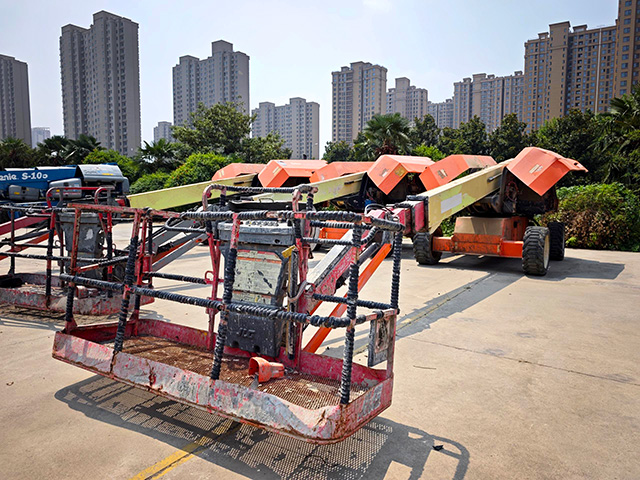
Buying a used forklift is deceptively simple. You pick a capacity, a fuel type, and a mast height — and then you discover that every one of those choices changes the machine's footprint, its running cost, and whether it can actually do the job you bought it for. A 3-tonne diesel that works perfectly in a yard may be unusable inside a warehouse; a 1.5-tonne electric that glides through narrow aisles may stall on an outdoor ramp. This guide walks through every major decision so you can specify the right forklift the first time.
Electric vs Diesel vs LPG: The Fuel Decision
The fuel type is the single biggest determinant of where a forklift can work and what it costs to run. There are three mainstream options on the used market — electric, diesel, and liquefied petroleum gas (LPG) — and each has a clear sweet spot.
Electric Forklifts
Electric forklifts run on lead-acid or lithium-ion battery packs and produce zero exhaust emissions. They are the default choice for indoor work — warehouses, distribution centres, food processing plants, and manufacturing floors — where diesel fumes would make the air unsafe. They are also significantly quieter, typically operating below 75 dB, which matters in enclosed spaces and for night-shift work near residential areas.
The trade-off is upfront infrastructure. A lead-acid battery needs a dedicated charging station with ventilation, and a full charge takes 8–10 hours. Fast-charge lithium-ion systems reduce that to 1–2 hours but cost more to replace. Electric forklifts also have less tolerance for wet or muddy outdoor conditions unless specified with weather protection, and their gradient performance is generally lower than diesel equivalents.
Diesel Forklifts
Diesel forklifts are the workhorses of outdoor yards, ports, construction sites, and lumber yards. They deliver strong torque for climbing ramps, can operate in rain and mud, and refuelling takes minutes at a diesel pump rather than hours at a charger. For multi-shift operations where a battery swap is not practical, diesel remains the most flexible option.
The downsides are exhaust emissions, noise, and higher maintenance. A diesel engine needs regular oil and filter changes, injector servicing, and after-treatment maintenance on newer Tier 4 / Stage V models. In markets with strict indoor emission regulations — the EU, North America, Australia — diesel forklifts are effectively restricted to outdoor use. In emerging markets where emission rules are looser, diesel is often the default because fuel is cheap and charging infrastructure is absent.
LPG Forklifts
LPG (liquefied petroleum gas) forklifts occupy the middle ground. They produce lower emissions than diesel — enough to be used indoors in many jurisdictions with adequate ventilation — and refuelling is as simple as swapping a gas cylinder. They are common in the Middle East, parts of Africa, and Southeast Asia where LPG is readily available and cheaper than diesel per kilowatt-hour.
LPG engines require regular spark plug and filter changes, and the gas system needs periodic leak checks. They are less common in the Chinese used market than electric or diesel, so parts availability can be thinner outside major cities.
| Dimension | Electric | Diesel | LPG |
|---|---|---|---|
| Best for | Indoor warehouse, food, pharma | Outdoor yard, port, construction | Mixed indoor/outdoor |
| Emissions | Zero | High (diesel particulate) | Low-moderate |
| Noise | <75 dB | 85–95 dB | 80–90 dB |
| Refuel/recharge | 8–10 h (lead-acid) | 5 min | 2 min (cylinder swap) |
| Maintenance cost | Low (no engine) | High (engine + after-treatment) | Medium |
| Outdoor usability | Limited (dry surfaces) | Excellent | Good |
| Typical used price (3t) | $$$ | $$ | $$ |
Choosing the Right Capacity
Forklift capacity is rated at a specific load centre — typically 500 mm for counterbalance forklifts. A "3-tonne" forklift can safely lift 3,000 kg only when the load's centre of gravity is at or inside 500 mm from the fork heel. If your pallets are longer than 1,000 mm, or if you use long loads like pipes or timber, the effective capacity drops. Always calculate the actual load centre before selecting a capacity, and add a 10–15% safety margin.
| Capacity | Typical Applications | Common Industries |
|---|---|---|
| 1.0–1.5 t | Light pallets, small parts, narrow aisles | Retail backroom, electronics, pharmaceuticals |
| 1.6–2.0 t | Standard euro-pallets, single-pallet handling | Warehousing, FMCG, logistics |
| 2.5–3.0 t | Most common general-purpose size | Manufacturing, distribution, wholesale |
| 3.5 t | Heavier pallets, block/brick, beverage | Building materials, bottling, agriculture |
| 4.0–5.0 t | Heavy industrial loads, container stuffing | Steel, machinery, port terminals |
The 2.5–3.0 tonne segment is the most liquid in the used market — there are more units available, parts are cheaper, and resale is easier. If your loads average 2 tonnes but occasionally hit 2.8, a 3-tonne truck is the sensible choice rather than stretching a 2.5-tonne unit to its limit.
Mast Types and Lift Height
The mast (or "mast assembly") is the vertical structure that raises and lowers the forks. Masts are classified by the number of telescoping stages, and the choice depends on two numbers: the maximum lift height you need and the maximum collapsed height you can fit under (doorways, container roofs, low ceilings).
Standard (Two-Stage / Duplex) Mast
A two-stage mast has one fixed outer section and one moving inner section. It provides free lift (the ability to raise the forks without extending the overall mast height) of around 100–150 mm. Typical maximum lift height is 3–4.5 m. This is the simplest, most durable mast and is standard on outdoor yard trucks where overhead clearance is not a concern.
Three-Stage (Triplex) Mast
A three-stage mast adds a second moving section, allowing greater lift height — typically 4.5–6 m — while keeping the collapsed height low enough to pass through standard doorways and work inside containers. This is the most common mast for warehouse and mixed-use forklifts. Free lift is usually 1,000–1,500 mm, meaning you can stack pallets inside a container without the mast hitting the roof.
Four-Stage (Quad) Mast
A four-stage mast provides lift heights of 6–8 m or more while maintaining a compact collapsed height. These are used in very high-rack warehouses and for double-stacking in containers. The extra stages add complexity, more rollers to maintain, and slightly reduced residual capacity at full height. Four-stage masts command a premium on the used market and are less common outside major logistics hubs.
Free Lift: Why It Matters
Free lift is the distance the forks can rise before the mast's inner stage begins to extend. If you work inside shipping containers, under mezzanines, or through low doorways, you need sufficient free lift to lift a pallet to stacking height without the mast hitting the ceiling. A mast with zero or minimal free lift will force you to lower the load every time you move through a low opening — a major productivity killer. For container work, specify at least 1,000 mm of free lift.
Attachments and Fork Positioning
The right attachment can turn a general-purpose forklift into a specialised tool. The most common attachments on the used market include:
- Side shifter — Allows the forks to move left or right hydraulically, making it easier to align with pallets without repositioning the truck. Nearly universal on modern forklifts and worth insisting on.
- Fork positioner — Adjusts fork spacing hydraulically to handle different pallet widths. Common in logistics and manufacturing where pallet sizes vary.
- Clamp (paper roll / bale / carton) — Replaces forks with hydraulic clamps for handling paper rolls, cotton bales, or appliance cartons without pallets. Specialised but essential in certain industries.
- Rotator — Allows the forks or attachment to rotate 360°, used for dumping bins or inverting loads. Common in food processing and recycling.
- Push-pull — Handles slip-sheet loads instead of pallets, common in export shipping where pallets are not allowed into the destination country.
Attachments reduce the truck's residual capacity. A clamp adds weight at the front, moving the load centre forward and lowering the effective lifting capacity. Always check the capacity plate with the attachment fitted, not the base truck rating.
What to Inspect on a Used Forklift
A used forklift is a relatively simple machine, but a few critical components determine whether you got a bargain or a money pit. Before buying, inspect or request evidence of the following:
Forks and Mast
Check the fork blades for wear at the heel (the 90° bend). A worn heel reduces the fork's load-bearing thickness — if the blade is more than 10% thinner than the original specification, the forks should be replaced. Look for cracks, bent tips, and uneven wear between left and right forks. On the mast, inspect the rollers for flat spots or play, check the lift chains for stretched links or rust, and operate the mast through full lift and lower to look for jerky movement or oil leaks at the cylinders.
Hydraulic System
Run the machine at full lift with a load (or simulate load by pressing the lift lever against the relief valve) and watch for drift — the forks should not sink more than a few millimetres over 5 minutes. Check all hydraulic hoses for cracks, bulges, or oily residue. Test the steering and side-shift functions for smooth response. Milky hydraulic oil indicates water contamination, which is a serious problem.
Tyres
Forklift tyres are either solid (cushion) for indoor smooth floors or pneumatic (air-filled) for outdoor rough surfaces. Solid tyres should be checked for chunking, flat spots, and wear below the wear line. Pneumatic tyres need tread depth inspection and sidewall crack checks. A set of solid tyres costs a few hundred dollars; pneumatic tyres can cost more. Factor tyre replacement into your offer if they are near end of life.
Battery (Electric) or Engine (Diesel/LPG)
For electric forklifts, the battery is the single most expensive consumable. A lead-acid battery lasts 4–6 years (1,000–1,500 charge cycles) with proper maintenance; a replacement costs 30–50% of the truck's used value. Check the battery manufacture date (stamped on the casing), test specific gravity of each cell with a hydrometer (all cells should be within 0.02 of each other), and look for corrosion on terminals or swelling of the casing. For lithium-ion batteries, request a BMS (battery management system) health report showing cell balance and capacity retention.
For diesel and LPG forklifts, check the engine for blue smoke (burning oil), black smoke (over-fuelling), or white smoke (coolant in combustion). Listen for knocking or rattling. Check oil level and condition — a milky dipstick indicates head gasket failure. For LPG, inspect the gas lines and regulator for leaks with soapy water, and check the expiry date on the gas cylinder.
Chassis and Overhead Guard
Inspect the chassis frame for cracks or weld repairs, especially around the front axle and mast mounting points. The overhead guard (ROPS/FOPS) should be intact — a bent or repaired guard may not provide the rated protection. Check the seat and seatbelt, and test all lights, horn, and reverse alarm.
Representative Brands on the Used Market
The Chinese used forklift market is dominated by domestic brands, with Japanese brands available in smaller numbers from import channels.
- Heli (合力) — China's largest forklift manufacturer by volume, with a full range from 1 to 46 tonnes. Heli trucks are known for solid build quality, wide parts availability across China and export markets, and competitive pricing. The CPCD30 (3-tonne diesel) and CPD30 (3-tonne electric) are the most common used models.
- Hangcha (杭叉) — China's second-largest forklift maker, closely comparable to Heli in quality and range. Hangcha has a strong export presence and parts network. The X series (3-tonne diesel) and A series (electric) are common on the used market.
- Toyota — The global benchmark for forklift quality and durability. Toyota forklifts hold their value better than any other brand, but used units in China are less common and more expensive. The 8FG/8FD series (3-tonne LPG/diesel) and 8FB (electric) are the most sought-after.
- TCM — A Japanese brand now part of the Hitachi group, TCM forklifts are well-regarded for reliability and are relatively common in the Chinese used market through former joint-venture channels. The FD30 (3-tonne diesel) and FB30 (electric) are typical models.
For buyers in Africa, Southeast Asia, and the Middle East, Heli and Hangcha offer the best balance of purchase price, parts availability, and after-sales support. Toyota and TCM command a premium but may be justified for high-utilisation fleets where downtime is expensive.
FAQ
Q: Can I use a diesel forklift indoors?
Only in very well-ventilated spaces and where local regulations permit. Diesel exhaust contains particulate matter and NOx that accumulate indoors. For any regular indoor use, an electric or LPG forklift is the correct choice.
Q: How long does an electric forklift battery last?
A well-maintained lead-acid battery lasts 4–6 years or 1,000–1,500 charge cycles. Lithium-ion batteries typically last 8–10 years or 3,000+ cycles but cost more to replace. Always check the battery manufacture date when evaluating a used electric forklift.
Q: What size forklift do I need for a standard pallet?
A standard Euro-pallet (1,200 × 800 mm) loaded to 1,000–1,200 kg is comfortably handled by a 1.5–2.0 tonne forklift. If your loads regularly exceed 1,500 kg or you handle longer loads, step up to 2.5–3.0 tonnes.
Q: Is a three-stage mast always better than two-stage?
Not always. A two-stage mast is simpler, has fewer wear points, and is cheaper to maintain. Choose a three-stage mast only if you need lift height above 4.5 m or need to work inside containers with limited overhead clearance.
Q: How many hours is too many on a used forklift?
A well-maintained forklift can run 20,000–30,000 hours before a major overhaul. Electric forklifts tend to last longer mechanically (no engine), though the battery will need replacement at 4–6 years. The key is maintenance history, not the hour reading alone — a 10,000-hour truck with full service records is a better buy than a 4,000-hour truck with none.
Sources: Heli and Hangcha official product specifications; Toyota Material Handling product data; Industrial Truck Association (ITA) capacity rating standards. Technical parameters are manufacturer-published values for representative models and may vary by configuration. For a specific unit, always verify against the machine's data plate and inspection report.
Related News
Sep 2, 2026
Remanufactured vs Refurbished vs Rebuilt vs As-Is: What These Terms Actually Mean on Used Machinery
Four labels — remanufactured, refurbished, rebuilt, as-is — can mean a USD 5,000 to USD 50,000 price gap on the same machine. A plain-English breakdown of industry standards, what each covers, warranty differences, and how to write the condition into your contract.
Sep 2, 2026
How to Pay for Machinery from China: T/T, Letter of Credit and Trade Assurance Compared
T/T, letter of credit, Trade Assurance, or escrow — which payment method protects you best when buying used construction machinery from China? A detailed breakdown of each method's process, costs, risks, and when to use each one, with a payment timeline and comparison table.
Sep 2, 2026
What Warranty Do You Actually Get on Used and Remanufactured Machinery?
Most used machinery is sold as-is with no warranty. Remanufactured machines may carry 30 to 90 days — but what does that actually cover, and what does it exclude? An honest breakdown of warranty coverage, exclusions, how to confirm terms before buying, and ASURE's warranty policy.