
September 2, 202613 min read
Komatsu vs Caterpillar vs Volvo: Which Used Excavator Brand Should You Buy in 2026?
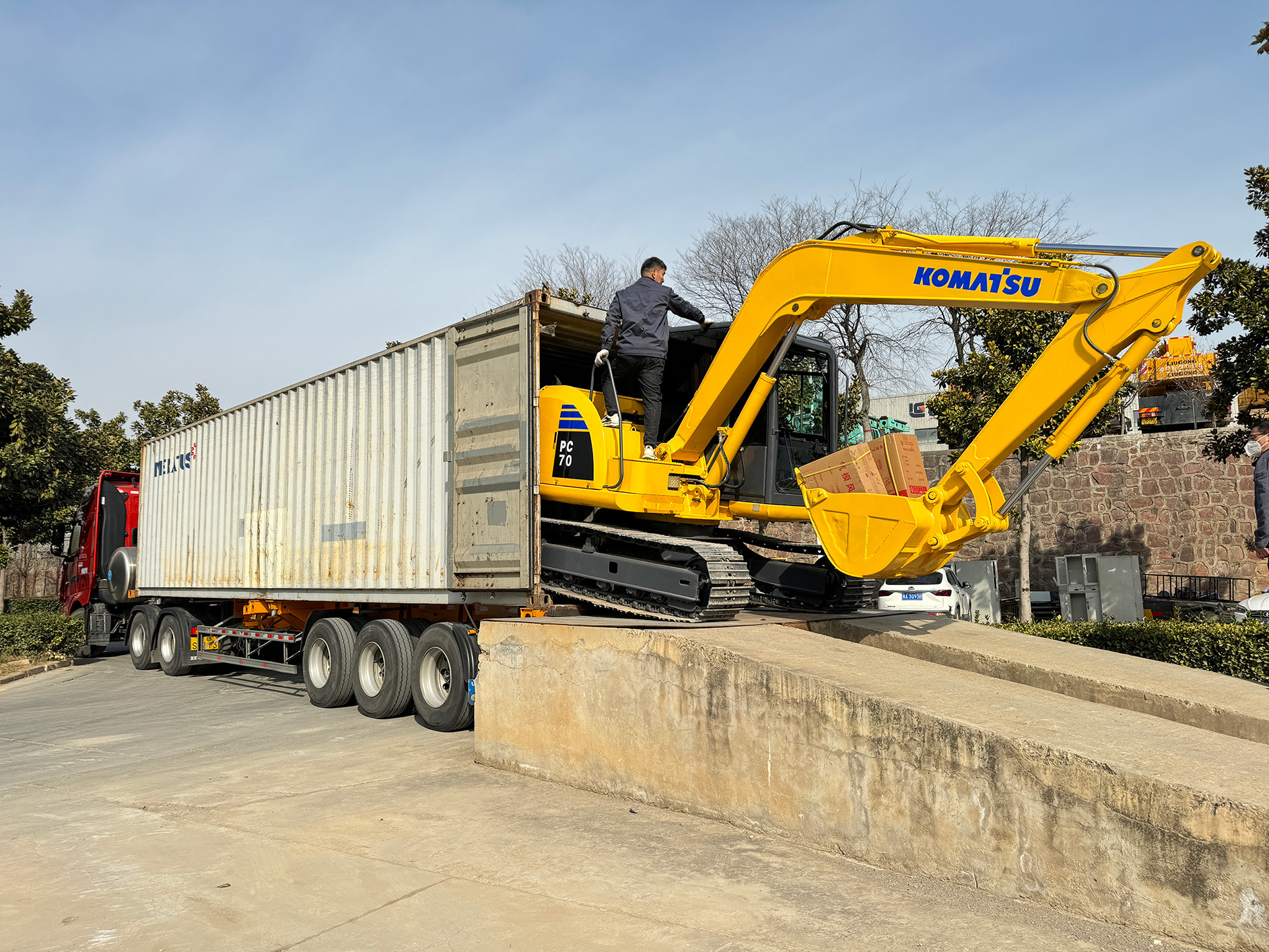
When you buy a used excavator, the brand you choose determines more than the colour of the paint. It determines how much you pay for parts five years from now, whether a mechanic in your market can fix it without waiting three weeks for a technician, how much the machine will be worth when you sell it, and — most importantly — whether it will hold up to the hours you need to put on it. Three brands dominate the international used excavator market: Komatsu (Japan), Caterpillar (USA), and Volvo (Sweden). Each has a distinct engineering philosophy, a different parts-and-service footprint, and a different profile of strengths and weaknesses. This guide compares them across the dimensions that actually matter to a used-equipment buyer.
Komatsu: Hydraulic Precision and Fuel Efficiency
Komatsu is the world's second-largest construction machinery manufacturer by revenue, and in the excavator category it is arguably the most respected name in the global used market. Komatsu's engineering identity is built on hydraulic precision and fuel efficiency. The company designs and manufactures its own engines, hydraulic pumps, and electronic control systems in-house, which means the components are engineered to work together as a system rather than assembled from third-party suppliers.
Engineering and Technology
Komatsu's hydraulic system uses a variable-displacement piston pump with closed-centre load-sensing (CLSS) technology, which delivers precise, proportional control of the boom, arm, and bucket. Operators consistently rate Komatsu machines as the smoothest and most controllable in the industry — a quality that matters for fine grading, truck loading, and demolition work. Komatsu was also an early adopter of hybrid and electric-assist technology, and its conventional machines are known for class-leading fuel economy, typically 10–15% better than equivalent Caterpillar models in side-by-side comparisons.
Product Range and Representative Models
Komatsu's PC series covers the full range from 1-tonne mini excavators (PC18) to 800-tonne mining shovels (PC8000). The most common used-market models are the 20-tonne class PC200, the 24-tonne PC240, the 36-tonne PC360, and the 45-tonne PC450. The PC200 is the best-selling used excavator in the world — there are more of them in circulation, more parts available, and more mechanics who know how to work on them than any other model. The PC200-8 and PC200-10 (Tier 3 / Tier 4 interim) are particularly sought after in emerging markets because they combine modern electronics with simpler, less emissions-dependent engine technology.
Parts, Service, and Resale
Komatsu parts are widely available through both official dealer networks and the extensive aftermarket in China, Japan, and Southeast Asia. Genuine Komatsu parts are moderately priced — generally cheaper than Caterpillar OEM parts but more expensive than Chinese aftermarket equivalents. Komatsu's KOMTRAX telematics system is standard on newer models, allowing remote monitoring of machine location, hours, fuel level, and maintenance alerts. On the used market, Komatsu excavators hold their value exceptionally well — a 5-year-old PC200 typically retains 45–55% of its original new price, among the highest in the industry.
Weaknesses
Komatsu's cab comfort and operator ergonomics lag behind Caterpillar and Volvo on older models (pre-2015). The electronic control systems on Tier 4 Final models can be sensitive to poor-quality diesel, causing injector and after-treatment problems in markets where fuel quality is inconsistent. Komatsu's dealer network is thinner than Caterpillar's in parts of Africa and Central Asia, though independent mechanics and aftermarket parts usually fill the gap.
Caterpillar: Global Network and Bulletproof Durability
Caterpillar is the world's largest construction machinery manufacturer and the most recognised heavy-equipment brand on earth. Caterpillar's engineering identity is built on durability, parts availability, and global service support. If you are working in a remote location — a mine in the Sahara, a road project in Papua New Guinea, a port in West Africa — the probability that there is a Caterpillar dealer or a mechanic who knows Caterpillar machines within reach is higher than for any other brand. That network is not a marketing claim; it is the result of 90+ years of building the most extensive dealer and distribution system in the industry.
Engineering and Technology
Caterpillar designs its own engines (the C series) and hydraulic systems, with a focus on high torque at low RPM and robust, over-built components. Caterpillar machines are generally heavier than equivalent Komatsu or Volvo models — a 320 weighs roughly 22 tonnes versus a PC200 at 20 tonnes — which contributes to stability and durability but also increases fuel consumption. Caterpillar's Cat Connect telematics and Product Link system provide detailed machine health monitoring, and the company's electronic control systems are among the most sophisticated in the industry. The 320 Next Gen (2017+) introduced electro-hydraulic controls, a cab redesign, and a 20% fuel efficiency improvement over the previous 320F.
Product Range and Representative Models
Caterpillar's excavator range spans from 1-tonne minis (300.9D) to 980-tonne mining shovels (6060). The most common used-market models are the 320 (20-tonne class), 323 (23-tonne), 330 (30-tonne), 336 (36-tonne), and 340 (40-tonne). The 320D and 320D2 (Tier 3) are the most liquid used excavators in Africa and the Middle East — simple, reliable, and easy to maintain without advanced diagnostic tools. The 320GC (a lower-spec, value-priced variant) is popular in Southeast Asia. For heavy-duty work, the 330 and 336 are preferred for their larger displacement engines and heavier undercarriages.
Parts, Service, and Resale
Caterpillar has the most extensive parts distribution network in the industry, with parts depots on every continent and dealer inventories in most major markets. Genuine Caterpillar parts are the most expensive in the industry — typically 20–40% more than equivalent Komatsu parts — but they are also the most available. The extensive Chinese aftermarket for Caterpillar parts (both OEM-quality and cheaper alternatives) helps offset the cost for buyers who source from China. Caterpillar excavators hold their value well, though slightly below Komatsu in most emerging markets — a 5-year-old 320 typically retains 40–50% of new price.
Weaknesses
Caterpillar machines consume more fuel than equivalent Komatsu or Volvo models — typically 10–20% more in the same application. The Tier 4 Final after-treatment systems (DPF + SCR) on 2018+ models are complex and expensive to repair outside the dealer network, and they require ultra-low-sulphur diesel that is not consistently available in many emerging markets. The high cost of genuine parts is a recurring complaint from owners in price-sensitive markets. The cab on D-series and earlier models is less comfortable than Volvo's.
Volvo: Fuel Economy and Operator Comfort
Volvo Construction Equipment is the smallest of the three by excavator volume, but it has a loyal following among operators and fleet managers who prioritise fuel economy, cab comfort, and low noise. Volvo's engineering identity is built on efficient design and operator-centric ergonomics. Volvo excavators are consistently rated as the most fuel-efficient in their class, and the Volvo Care Cab is widely regarded as the most comfortable operator environment in the industry — important for machines that run 10+ hours per day.
Engineering and Technology
Volvo uses its own D-series diesel engines (developed with Volvo Penta) and a load-sensing hydraulic system that prioritises fuel efficiency. The company's ECO mode (standard on most models) optimises engine RPM and hydraulic flow to reduce fuel consumption by up to 10% without sacrificing performance. Volvo was an early leader in care cab design, with low noise levels (typically below 74 dB inside the cab), excellent visibility, and ergonomic controls. The CareTrack telematics system provides remote monitoring and geofencing.
Product Range and Representative Models
Volvo's EC series covers 1.5-tonne minis (EC18D) to 90-tonne mining excavators (EC950F). The most common used-market models are the EC210 (21-tonne), EC220 (22-tonne), EC250 (25-tonne), EC300 (30-tonne), and EC380 (38-tonne). The EC210B and EC210C (Tier 3) are the most common Volvo used excavators in emerging markets, valued for their fuel efficiency and reliability. Volvo's market share is smaller than Komatsu or Caterpillar, so there are fewer used units in circulation — but those that are available tend to be well-maintained because Volvo owners are often professional fleet operators.
Parts, Service, and Resale
Volvo's dealer network is smaller than Caterpillar's or Komatsu's, particularly in Africa and Central Asia. Parts availability can be inconsistent in remote markets, and genuine Volvo parts are expensive — comparable to or slightly above Caterpillar pricing. However, Volvo excavators share some engine and hydraulic components with other Volvo Group products (trucks, buses), which can help in markets where Volvo truck dealers exist. Resale value for Volvo excavators is generally good but below Komatsu and Caterpillar in most emerging markets — a 5-year-old EC210 typically retains 35–45% of new price. The smaller market share means there are fewer buyers when you want to sell, which can extend the selling timeline.
Weaknesses
Volvo's biggest weakness as a used-equipment brand is parts and service availability in emerging markets. If a critical component fails and it is not in stock locally, the wait can be 2–4 weeks. Volvo's undercarriage components (track chains, rollers, idlers) are sometimes reported to wear faster than equivalent Komatsu or Caterpillar components in abrasive conditions. The smaller production volume means fewer used units on the market, which limits choice and can push prices up for well-maintained examples.
Brand Comparison Table
| Dimension | Komatsu | Caterpillar | Volvo |
|---|---|---|---|
| Origin | Japan | USA | Sweden |
| 2025 global rank (excavator) | #2 | #1 | #5 (approx.) |
| Engineering identity | Hydraulic precision, fuel efficiency | Durability, global support | Fuel economy, operator comfort |
| Fuel consumption (20t class) | Lowest | Highest | Low |
| Hydraulic control feel | Best (smoothest) | Good (strong) | Good (precise) |
| Cab comfort (pre-2015) | Average | Average | Best |
| Parts cost (OEM) | Medium | High | High |
| Parts availability (emerging markets) | Good | Excellent | Fair |
| 5-year residual value (20t class) | 45–55% | 40–50% | 35–45% |
| Most common used model | PC200-8/-10 | 320D/D2 | EC210B/C |
| Best for | High-utilisation, fuel-sensitive ops | Remote locations, global fleets | Operator comfort, moderate utilisation |
Which Brand for Which Market?
Africa
In West, East, and Southern Africa, Caterpillar has the strongest dealer and parts network, followed by Komatsu. Volvo's presence is concentrated in South Africa and major capital cities. For remote projects, Caterpillar is the safest choice for parts availability. For price-sensitive buyers who can source parts from China, Komatsu offers the best balance of reliability, fuel economy, and resale value. The Komatsu PC200-8 and Caterpillar 320D are the two most liquid used excavators in Africa.
Southeast Asia
Komatsu dominates the Southeast Asian used excavator market, particularly in Indonesia, the Philippines, Vietnam, and Thailand. The PC200-8 is ubiquitous, and Komatsu parts and mechanics are available in every major city. Caterpillar is strong in Singapore and Malaysia. Volvo has a smaller but growing presence, particularly in Thailand. For this region, Komatsu is the default choice for resale value and parts availability.
Middle East
Caterpillar and Komatsu are the dominant brands in the Middle East, with Caterpillar particularly strong in Saudi Arabia and the UAE through large dealer networks. Komatsu is strong in Iraq, Iran, and the Levant. Volvo has a presence in the GCC but is less common. The hot, dusty climate puts a premium on cooling system reliability and air filtration — all three brands perform well, but Caterpillar's heavier build and larger cooling packages are often preferred for desert work.
Central Asia and CIS
Komatsu and Caterpillar are the most common international brands in Central Asia, with Komatsu particularly strong in Kazakhstan and Uzbekistan for mining and infrastructure. Volvo has a smaller presence. Parts availability is a concern across the region, so the brand with the nearest parts depot — usually Caterpillar or Komatsu through Russian or Chinese distribution channels — is the practical choice.
The Chinese Used Market Supply Picture
China is the world's largest source of used Komatsu and Caterpillar excavators for export. Both brands have had manufacturing joint ventures in China for decades — Komatsu with Jiangsu Komatsu (now fully owned), Caterpillar with Xuzhou Caterpillar — which means large numbers of China-built machines enter the used market when domestic construction projects wind down. These China-built units are often lower-spec (Tier 3 or Tier 2 emissions, simpler electronics) than machines built for European or North American markets, which is actually an advantage for export to emerging markets where ultra-low-sulphur diesel and advanced diagnostics are not available.
Volvo excavators are less common in the Chinese used market because Volvo's market share in China has historically been smaller than Komatsu or Caterpillar. Used Volvo units in China tend to be imported from Korea or Europe rather than locally manufactured, which can affect pricing and parts compatibility. Volvo's China production (in Jinan, Shandong) has increased in recent years, so supply is gradually improving.
FAQ
Q: Which brand has the cheapest parts?
For OEM parts, Komatsu is generally the cheapest of the three, followed by Volvo and Caterpillar. However, all three brands have extensive aftermarket parts availability in China, and aftermarket parts can be 40–60% cheaper than OEM. The real cost difference is parts availability — Caterpillar parts are easiest to find anywhere in the world, which means less downtime waiting for shipments.
Q: Is the fuel economy difference between Komatsu and Caterpillar significant?
Yes. In a 20-tonne class machine running 2,000 hours per year, a 15% fuel consumption difference at $0.80/litre amounts to roughly $3,000–4,000 per year in fuel savings. Over a 5-year ownership period, that is $15,000–20,000 — enough to offset a higher purchase price or more expensive parts.
Q: Should I avoid Tier 4 Final machines for use in emerging markets?
Not necessarily, but you should be aware of the trade-offs. Tier 4 Final engines (2018+ Caterpillar, 2017+ Komatsu, 2016+ Volvo) use diesel particulate filters (DPF) and selective catalytic reduction (SCR) that require ultra-low-sulphur diesel (ULSD, max 15 ppm sulphur) and diesel exhaust fluid (DEF/AdBlue). If ULSD is not consistently available in your market, the DPF can clog and the engine can derate or shut down. For markets with poor fuel quality, Tier 3 machines (pre-2016 for most models) are simpler and more forgiving. They also tend to be cheaper on the used market.
Q: Which brand is easiest to sell when I am done with it?
Komatsu and Caterpillar are the most liquid brands globally — there are always buyers for a PC200 or 320 in good condition. Volvo takes longer to sell in most emerging markets because there are fewer buyers who specifically want the brand, and the smaller dealer network makes some buyers nervous about long-term support. If resale speed is important, choose Komatsu or Caterpillar.
Q: Do Chinese-built Komatsu and Caterpillar machines differ from Japanese or American-built ones?
Chinese-built Komatsu and Caterpillar machines use the same core designs and quality standards as machines built in other factories, but they are often configured for the Chinese and emerging markets — Tier 2 or Tier 3 emissions rather than Tier 4 Final, simpler electronics, and in some cases locally sourced hydraulic components. These differences make them more suitable for export to markets with lower fuel quality and less advanced service infrastructure. The build quality and durability are comparable to machines built in Japan or the USA.
Sources: KHL Group International Construction Yellow Table 2025 rankings; Komatsu, Caterpillar, and Volvo Construction Equipment official product specifications and annual reports; industry residual value data from EquipmentWatch and Rouse Services. Fuel consumption figures are manufacturer-published and independent test averages for 20-tonne class machines in general digging applications; actual consumption varies by application, operator, and machine condition. Residual value ranges are indicative for well-maintained machines in emerging markets and may vary by region and model.
Related News
Sep 2, 2026
Remanufactured vs Refurbished vs Rebuilt vs As-Is: What These Terms Actually Mean on Used Machinery
Four labels — remanufactured, refurbished, rebuilt, as-is — can mean a USD 5,000 to USD 50,000 price gap on the same machine. A plain-English breakdown of industry standards, what each covers, warranty differences, and how to write the condition into your contract.
Sep 2, 2026
How to Pay for Machinery from China: T/T, Letter of Credit and Trade Assurance Compared
T/T, letter of credit, Trade Assurance, or escrow — which payment method protects you best when buying used construction machinery from China? A detailed breakdown of each method's process, costs, risks, and when to use each one, with a payment timeline and comparison table.
Sep 2, 2026
What Warranty Do You Actually Get on Used and Remanufactured Machinery?
Most used machinery is sold as-is with no warranty. Remanufactured machines may carry 30 to 90 days — but what does that actually cover, and what does it exclude? An honest breakdown of warranty coverage, exclusions, how to confirm terms before buying, and ASURE's warranty policy.