
August 29, 20265 min read
LCL vs FCL: How to Choose the Right Container Size When Shipping Used Machinery from China
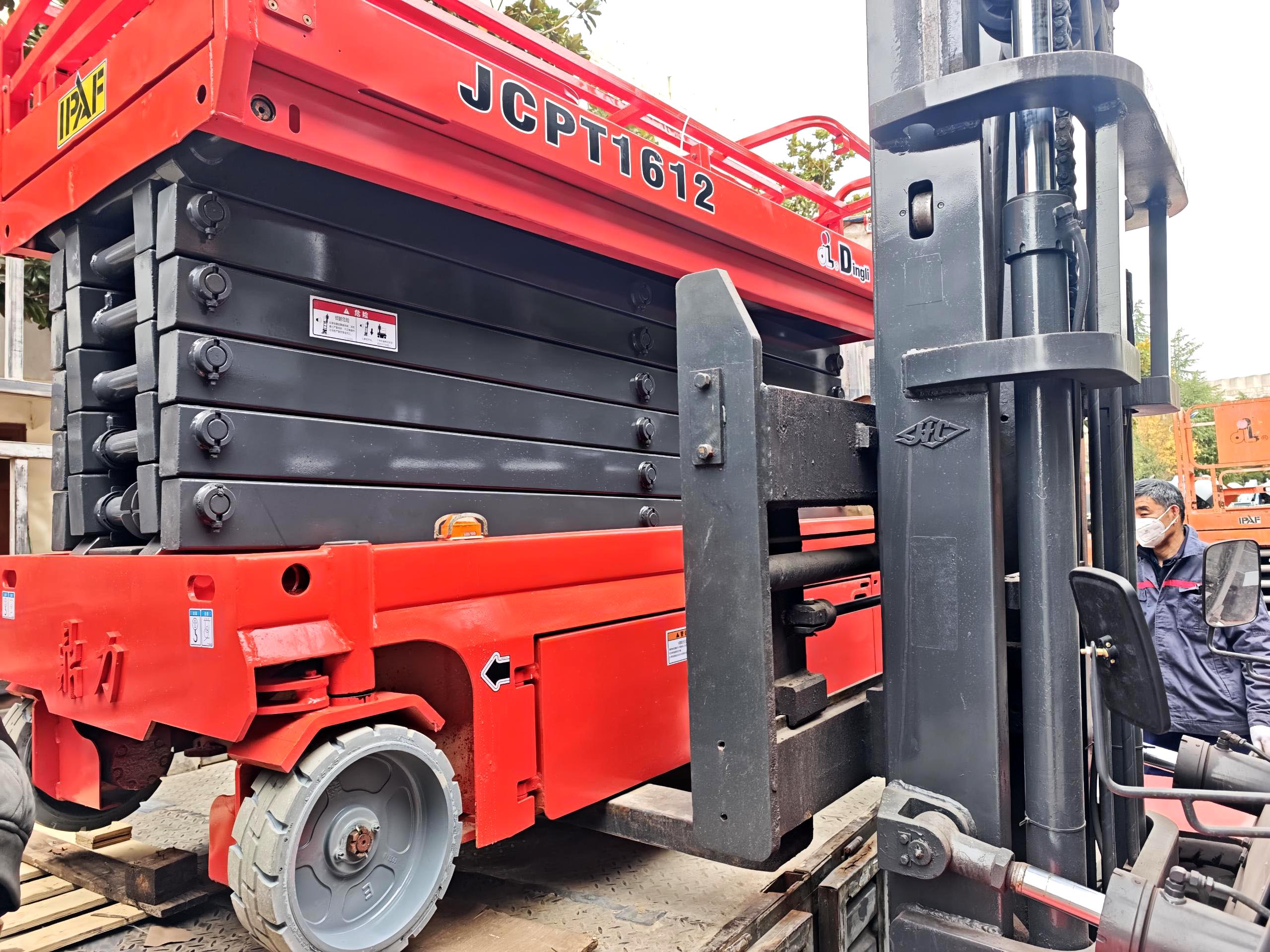
When a single scissor lift, a single excavator, or a single boom lift is too big for a standard container but too small to fill a flat rack, the choice between LCL, FCL, and flat rack is the difference between a clean delivery and a 30% freight surprise.
The four options, in plain terms
For cross-border shipments of used construction machinery from China, four container options cover almost every deal: 20ft standard container (FCL), 40ft standard container (FCL), 40ft high-cube container (FCL, with 30cm more internal height), and flat rack (FCL or LCL depending on size). The choice between them is driven by the size of the machine, the number of machines in the shipment, and the destination port.
FCL 20ft — the most common scissor-lift option
A 20ft standard container has internal dimensions of about 5.9m long x 2.35m wide x 2.39m high, with a payload of roughly 28 tonnes. For scissor lifts and small boom lifts, a 20ft container fits between two and four units, depending on the model. For example, a Dingli JCPT0807HD (8m working height) fits up to four units per 20ft container; a JCPT1412DC (14m) fits two units; a JCPT1612DC (16m) fits one to two units depending on configuration. The cost of a 20ft container from Shanghai to West Africa in 2026 is roughly USD 2,200-2,800, depending on the destination port and the shipping line.
FCL 40ft and 40ft HC — the excavator and loader default
A 40ft standard container has internal dimensions of about 12.03m long x 2.35m wide x 2.39m high, with a payload of roughly 26 tonnes. A 40ft high-cube (HC) adds 30cm of internal height (to 2.69m), which is what most machinery shippers use. For a mid-size excavator (CAT 320 class, 20-tonne operating weight) with the bucket and stick partially disassembled, a 40ft HC is the right container. For a small excavator (SANY 55 class, 5-tonne), two units fit in a 40ft HC. The cost premium for a 40ft HC over a 20ft is typically 60-80%, so the cost-per-unit drops significantly when the shipment is two or more units.
Flat rack — for anything too big for a container
A flat rack is an open-top, open-side platform with no roof or walls. It is the right option for a full-size excavator with the boom extended, a wheel loader, a motor grader, a telehandler, or a truck crane. The machine is lashed to the platform with heavy chains, and the flat rack is loaded onto the vessel as a standard 20ft or 40ft FCL slot. The cost of a 40ft flat rack from Shanghai to West Africa in 2026 is roughly USD 3,500-4,500, depending on the destination. Flat racks are also the right option for very tall aerial work platforms (a 39m JLG 1200SJ boom lift, for example, will not fit in any closed container).
LCL — for a single small unit
LCL (Less than Container Load) means sharing a container with shipments from other buyers. For a single small scissor lift (8m working height, 2.3 tonnes) heading to a destination port that does not have weekly direct sailings from China, LCL is often the only option — and it works. The cost is higher per cubic metre than FCL, and the transit time is longer (typically 5-10 days more, because the container is consolidated at a warehouse before sailing), but the alternative is to wait weeks for a full FCL slot. The cost of LCL for a single scissor lift is roughly USD 800-1,200, depending on the destination.
Break-even math: when two units make FCL cheaper than LCL
For two scissor lifts of similar size, the math almost always favours a 20ft FCL over two separate LCL shipments. Two LCL shipments at USD 1,000 each = USD 2,000, plus two sets of origin charges (USD 200 each) and two sets of destination charges (USD 200 each) = USD 2,800 total. One 20ft FCL at USD 2,500 plus one set of origin and destination charges (USD 400) = USD 2,900 total. The FCL is marginally more expensive, but the transit time is shorter, the risk of consolidation damage is lower, and the documentation is simpler. For three or more units, FCL is unambiguously cheaper.
The hidden costs that change the math
Three hidden costs often change the LCL-vs-FCL decision: (1) origin charges (USD 200-400 per shipment for export clearance, THC, and documentation), (2) destination charges (USD 200-500 per shipment for import clearance, THC, and delivery to the buyer’s yard), and (3) consolidation damage (LCL shipments share a container with other buyers’ cargo, and rough handling at the consolidation warehouse is a real risk). The FCL option removes the third risk entirely and reduces the first two to a single charge.
How the destination port affects the choice
For destination ports with weekly direct sailings from China (Singapore, Hong Kong, Hamburg, Rotterdam, Los Angeles, Long Beach), FCL is the right default because the sailing schedule is reliable and the per-unit cost is competitive. For destination ports with infrequent sailings (Lagos, Apapa, Tamatave, Toamasina, Mombasa), LCL is sometimes the only option for a single small unit, because the cost of a dedicated FCL slot for one machine can be 2-3x the cost of the LCL alternative.
What we use at Asure
For shipments of one to two scissor lifts, we default to 20ft FCL. For shipments of one 20-tonne excavator, we default to 40ft HC FCL with the bucket and stick partially disassembled. For shipments of one full-size excavator or one wheel loader, we default to 40ft flat rack. For single small units heading to a low-frequency destination, we offer LCL with a clear note on the consolidation risk. The right option is the one that balances cost, transit time, and damage risk for the specific shipment — we are happy to quote all three and let the buyer choose.
Container dimensions and weights are nominal. The actual fit depends on the specific machine, the disassembly required, and the lashing method. For a specific shipment, we prepare a written loading plan that names the container, the lashing points, and the expected dimensions and weight.
Related News
Sep 2, 2026
Remanufactured vs Refurbished vs Rebuilt vs As-Is: What These Terms Actually Mean on Used Machinery
Four labels — remanufactured, refurbished, rebuilt, as-is — can mean a USD 5,000 to USD 50,000 price gap on the same machine. A plain-English breakdown of industry standards, what each covers, warranty differences, and how to write the condition into your contract.
Sep 2, 2026
How to Pay for Machinery from China: T/T, Letter of Credit and Trade Assurance Compared
T/T, letter of credit, Trade Assurance, or escrow — which payment method protects you best when buying used construction machinery from China? A detailed breakdown of each method's process, costs, risks, and when to use each one, with a payment timeline and comparison table.
Sep 2, 2026
What Warranty Do You Actually Get on Used and Remanufactured Machinery?
Most used machinery is sold as-is with no warranty. Remanufactured machines may carry 30 to 90 days — but what does that actually cover, and what does it exclude? An honest breakdown of warranty coverage, exclusions, how to confirm terms before buying, and ASURE's warranty policy.