September 2, 202610 min read
Scissor Lift vs Boom Lift vs Articulating Boom: Which Aerial Work Platform Should You Buy?
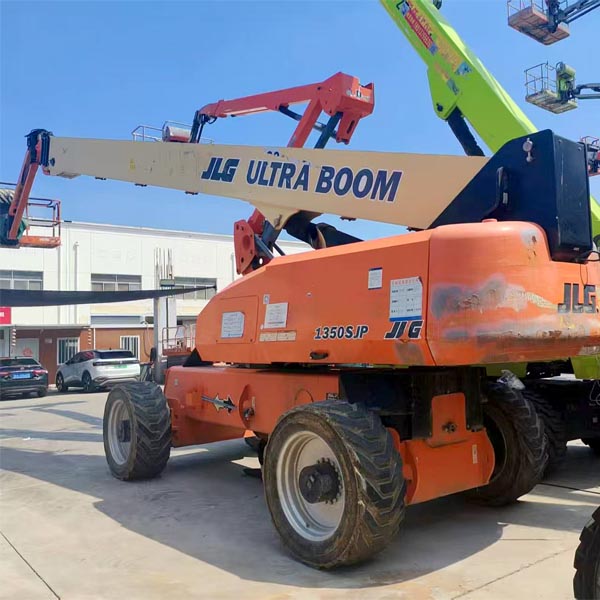
An aerial work platform (AWP) is not a one-size-fits-all machine. The three main types — scissor lifts, telescopic boom lifts, and articulating boom lifts — each solve a different geometry problem. A scissor lift goes straight up with a big platform. A telescopic boom lift reaches far out from a single point. An articulating boom lift bends around obstacles to reach work areas that the other two cannot access. Choosing the wrong type means either overpaying for capability you do not need, or — worse — renting or buying a machine that physically cannot reach the work face. This guide breaks down each type by working height, platform capacity, power source, terrain capability, and the specific jobs where it is the right (and wrong) choice.
Scissor Lifts: Vertical Lift, Large Platform
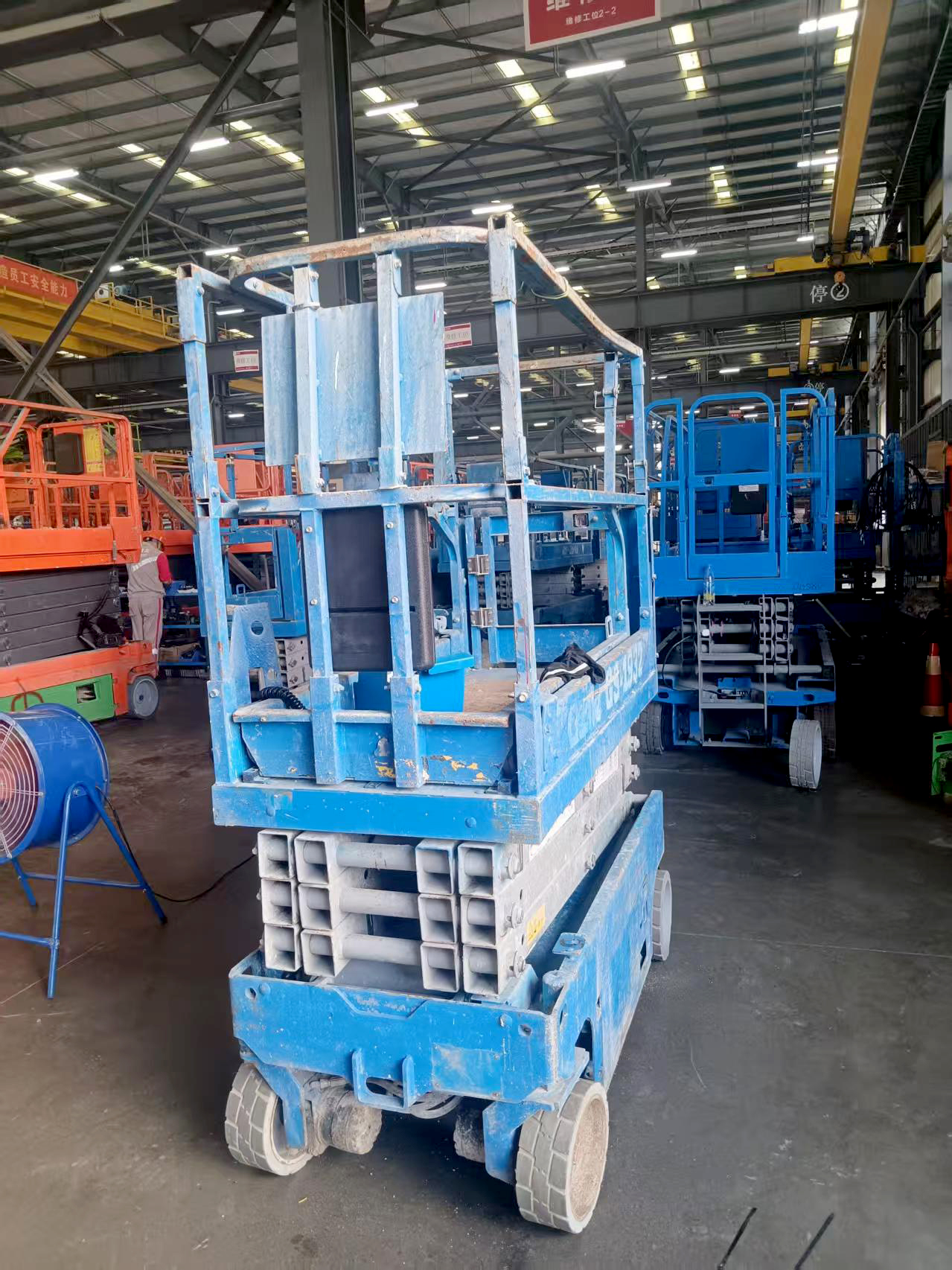
A scissor lift uses a criss-cross pantograph mechanism to raise and lower a platform directly above the chassis. It has no horizontal outreach — the platform stays within the machine's footprint — but it offers the largest work platform of any AWP type and the highest platform capacity. Scissor lifts are the workhorses of indoor maintenance, fit-out, and warehousing, where the work is directly overhead and multiple workers or materials need to be on the platform at once.
Working Height and Capacity
Electric scissor lifts typically cover working heights from 6 m (20 ft) to 16 m (52 ft). Rough-terrain diesel scissor lifts extend that range to 18–22 m (59–72 ft) with larger platforms and higher capacities. Platform capacities range from 230 kg (500 lb) on compact electric models to over 1,000 kg (2,200 lb) on heavy-duty rough-terrain units. The large platform — typically 2.3 m × 1.2 m with a 0.9 m extendable deck — means two to four workers plus tools and materials can work simultaneously, which is a major productivity advantage over boom lifts that typically carry two people.
Power and Terrain
Most indoor scissor lifts are battery-electric, producing zero emissions and operating quietly enough for occupied buildings. They use solid non-marking tyres for smooth concrete floors. Rough-terrain scissor lifts use diesel engines and pneumatic tyres with four-wheel drive, allowing them to work on uneven ground, slopes, and construction sites. Some manufacturers offer bi-energy (electric + diesel) models that can switch between indoor and outdoor use.
When to Choose a Scissor Lift
- Indoor ceiling work, ducting, sprinkler installation, lighting
- Warehouse racking maintenance and stocktaking at height
- Large-area flat-facade work where the machine can be positioned directly below
- Jobs requiring multiple workers or heavy materials on the platform
- Low-level access (6–10 m) where a boom lift would be overkill
When a Scissor Lift Is the Wrong Choice
- Work that requires horizontal outreach beyond the machine's footprint
- Reaching over obstacles, machinery, or building features
- Working heights above 16 m indoors or 22 m outdoors (boom lifts go higher)
- Jobs where the machine cannot be positioned directly below the work area
Telescopic Boom Lifts: Straight Reach, Maximum Height
A telescopic boom lift (also called a straight boom or stick boom) uses a series of nested steel sections that extend telescopically from a rotating turret. The boom pivots up and down and the turret rotates 360°, giving the machine the ability to reach high and far from a single position. Telescopic booms offer the greatest working heights of any AWP — up to 44 m (144 ft) or more on the largest models — and the longest horizontal outreach, typically 18–24 m (60–80 ft).
Working Height and Outreach
Telescopic boom lifts range from compact 12 m (40 ft) models to ultra-high 40+ m (130+ ft) units. The most common sizes on the used market are 18–26 m (60–86 ft), which cover the majority of commercial construction and maintenance work. Horizontal outreach is typically 60–75% of the maximum working height — a 26 m boom may reach 18 m horizontally. Platform capacity is usually 230–450 kg (500–1,000 lb), enough for two workers and tools. The key limitation of a telescopic boom is that it reaches in a straight line — if there is an obstacle between the machine and the work face, the boom cannot go around it.
Power and Terrain
Most telescopic boom lifts are diesel-powered with four-wheel drive and rough-terrain tyres, designed for outdoor construction sites. Electric models exist in the smaller sizes (12–18 m) for indoor use, but they are less common on the used market. Bi-energy models combine a diesel engine for outdoor travel with an electric motor for indoor operation, though they add complexity and cost.
When to Choose a Telescopic Boom Lift
- High-rise facade work, window installation, exterior painting
- Steel erection and roof work on large commercial buildings
- Jobs requiring long horizontal reach from a single set-up position
- Wind turbine maintenance, tower work, and other ultra-high applications
- Outdoor construction where terrain is uneven and the work face is open
When a Telescopic Boom Is the Wrong Choice
- Work areas with obstacles between the machine and the work face
- Indoor work in confined spaces (the boom needs room to swing)
- Jobs requiring more than two workers on the platform
- Low-level work under 12 m (a scissor lift is cheaper and more stable)
Articulating Boom Lifts: Bend Around Obstacles
An articulating boom lift (also called a knuckle boom or Z-boom) uses multiple boom sections connected by hinged joints — like a human arm with an elbow. The boom can bend up, over, and around obstacles, allowing the platform to reach work areas that are not in a direct line from the machine. This makes articulating booms indispensable for maintenance in industrial plants, where pipes, ducts, and machinery block straight-line access, and for building maintenance where the work face is set back behind a facade or overhang.
Working Height and Up-and-Over Capability
Articulating boom lifts cover working heights from 12 m (40 ft) to 40 m (130 ft), with the most common used-market sizes being 14–26 m (46–86 ft). The defining specification is "up-and-over" height — the maximum height the boom can clear an obstacle while still reaching the work area. A typical 20 m articulating boom may have an up-and-over height of 8–10 m. Horizontal outreach is generally shorter than an equivalent telescopic boom — typically 10–16 m (33–52 ft) — because the articulated joints consume some of the boom's length. Platform capacity is similar to telescopic booms: 230–300 kg (500–660 lb) for two workers.
Power and Terrain
Articulating booms are available in diesel (rough-terrain, four-wheel drive), electric (indoor, solid tyres), and bi-energy configurations. Electric articulating booms are particularly popular for indoor maintenance in factories and warehouses where zero emissions and low noise are required. The compact tail swing on many electric models allows them to work in narrow aisles and tight corners.
When to Choose an Articulating Boom Lift
- Industrial plant maintenance — reaching over pipes, ducts, and machinery
- Building maintenance where the work face is behind an overhang or setback
- Confined indoor spaces where a telescopic boom cannot swing freely
- Jobs requiring precise positioning of the platform at odd angles
- Aircraft maintenance, stadium maintenance, and other complex-environment work
When an Articulating Boom Is the Wrong Choice
- Jobs requiring maximum horizontal outreach (telescopic booms reach farther)
- Ultra-high work above 40 m (telescopic booms go higher)
- Large-area flat work directly overhead (scissor lifts are cheaper and carry more)
- Budget-sensitive jobs where a simpler machine type would suffice
Side-by-Side Comparison
| Dimension | Scissor Lift | Telescopic Boom | Articulating Boom |
|---|---|---|---|
| Working height range | 6–22 m | 12–44+ m | 12–40 m |
| Horizontal outreach | None (vertical only) | 18–24 m | 10–16 m |
| Platform capacity | 230–1,000+ kg | 230–450 kg | 230–300 kg |
| Workers on platform | 2–4 | 2 | 2 |
| Obstacle navigation | None | None (straight line) | Excellent (bends around) |
| Power options | Electric / diesel / bi-energy | Diesel / electric / bi-energy | Electric / diesel / bi-energy |
| Indoor suitability | Excellent (electric) | Limited (small electric only) | Good (electric models) |
| Outdoor rough terrain | Good (RT models) | Excellent | Good (RT models) |
| Typical used price (14–16 m) | $ | $$ | $$ |
Representative Models by Brand
Scissor Lifts
- Dingli JCPT series — JCPT0807 (8 m), JCPT1012 (10 m), JCPT1212 (12 m), JCPT1412 (14 m), JCPT1612 (16 m). Electric, compact, widely available in the Chinese used market.
- Genie GS series — GS1932 (6 m), GS2646 (8 m), GS3246 (10 m), GS4047 (12 m). The global benchmark for electric scissor lifts.
- JLG ES/R series — 1930ES (6 m), 2646ES (8 m), 3246ES (10 m), 4394RT (14 m rough terrain). Known for durability and parts availability.
Telescopic Boom Lifts
- Dingli BT series — BT24RT (24 m), BT26RT (26 m), BT28RT (28 m). Diesel rough-terrain, competitive pricing.
- Genie S series — S65 (20 m), S85 (26 m), S105 (32 m), S125 (38 m). The most widely recognised telescopic boom globally.
- JLG 600/800 series — 660SJ (20 m), 800S (24 m), 860SJ (26 m), 1350SJP (41 m). Known for strong rough-terrain performance.
Articulating Boom Lifts
- Dingli BA/GTBZ series — BA24RT (24 m diesel), GTBZ20AE (20 m electric). Growing presence in export markets.
- Genie Z series — Z45 (14 m), Z-62/40 (19 m). The Z45 is one of the most popular articulating booms ever built.
- JLG E/450 series — E450AJ (14 m electric), 450AJ (14 m diesel). The E450AJ is a staple for indoor maintenance.
How to Choose: A Decision Framework
Start with the work face, not the machine. Answer these questions in order:
- How high is the work? Under 10 m → scissor lift is almost always the most economical. 10–16 m → scissor if indoor and overhead, boom if outdoor or outreach needed. Above 16 m → boom lift.
- Is the work directly overhead? Yes → scissor lift (larger platform, lower cost). No → boom lift.
- Are there obstacles between the machine and the work? Yes → articulating boom. No → telescopic boom (farther reach, lower cost).
- Indoor or outdoor? Indoor → electric scissor or electric articulating boom. Outdoor → diesel rough-terrain model. Mixed → bi-energy.
- How many workers and how much material on the platform? More than two workers or heavy materials → scissor lift. Two workers or fewer → boom lift.
FAQ
Q: Can a scissor lift be used outdoors?
Electric scissor lifts with solid tyres are designed for smooth, flat indoor surfaces. They can be used outdoors on dry, level concrete but are not suitable for grass, gravel, slopes, or uneven ground. For outdoor rough terrain, choose a diesel rough-terrain scissor lift or a boom lift.
Q: What is the difference between working height and platform height?
Platform height is the height of the platform floor from the ground. Working height is platform height plus approximately 2 m (the height of a standing worker with arms raised). Manufacturers typically quote working height. Always check which measurement is being used when comparing machines.
Q: Why are articulating booms more expensive than telescopic booms of the same height?
Articulating booms have more joints, more hydraulic cylinders, and more complex control systems than telescopic booms. The additional moving parts increase manufacturing cost, maintenance cost, and purchase price. The premium is justified only when the job requires obstacle navigation that a straight boom cannot provide.
Q: How do I choose between electric and diesel for outdoor work?
If the outdoor surface is flat and dry (concrete yard, paved area), an electric machine can work outdoors and offers zero emissions and lower noise. If the terrain is uneven, muddy, or sloped, a diesel rough-terrain machine with four-wheel drive is necessary. For mixed indoor/outdoor use, a bi-energy machine gives you both options.
Q: What is the most versatile AWP for a rental fleet?
For general rental, a 14–16 m electric scissor lift and a 20 m articulating boom lift cover the widest range of common jobs. The scissor handles indoor overhead work, and the articulating boom handles outdoor and obstacle-navigation work. A telescopic boom is a specialised addition for high-reach, open-face jobs.
Sources: Dingli, Genie (Terex AWP), and JLG official product specifications; IPAF (International Powered Access Federation) safety and classification guidelines. Working heights and capacities are manufacturer-published values for representative models and may vary by configuration and region. Always verify against the machine's data plate and load chart before operation.
Related News
Sep 2, 2026
Remanufactured vs Refurbished vs Rebuilt vs As-Is: What These Terms Actually Mean on Used Machinery
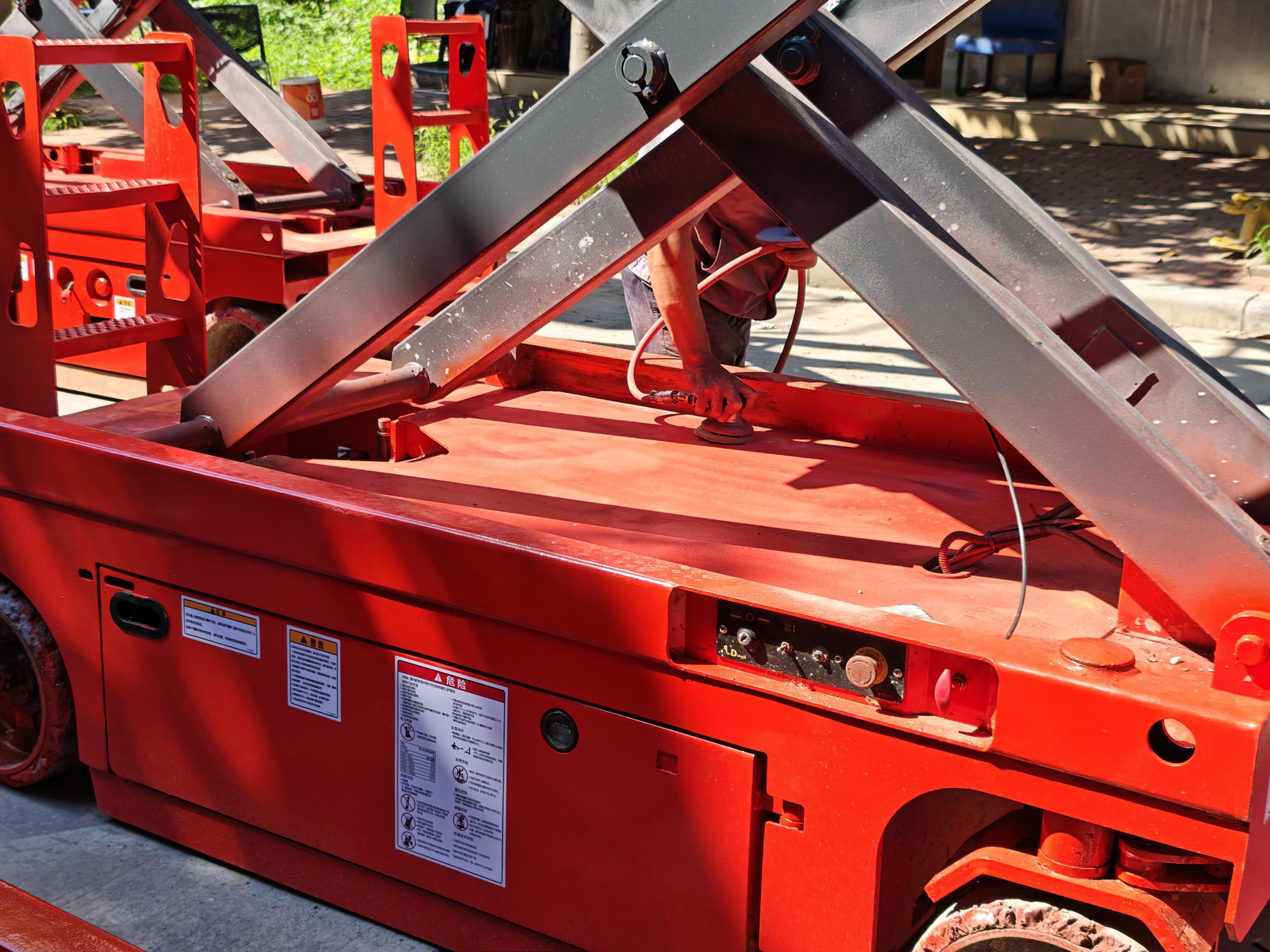
Four labels — remanufactured, refurbished, rebuilt, as-is — can mean a USD 5,000 to USD 50,000 price gap on the same machine. A plain-English breakdown of industry standards, what each covers, warranty differences, and how to write the condition into your contract.
Sep 2, 2026
How to Pay for Machinery from China: T/T, Letter of Credit and Trade Assurance Compared
T/T, letter of credit, Trade Assurance, or escrow — which payment method protects you best when buying used construction machinery from China? A detailed breakdown of each method's process, costs, risks, and when to use each one, with a payment timeline and comparison table.
Sep 2, 2026
What Warranty Do You Actually Get on Used and Remanufactured Machinery?
Most used machinery is sold as-is with no warranty. Remanufactured machines may carry 30 to 90 days — but what does that actually cover, and what does it exclude? An honest breakdown of warranty coverage, exclusions, how to confirm terms before buying, and ASURE's warranty policy.