
August 29, 20252 min read
What Does a Safety-Compliant Scissor Lift Look Like?
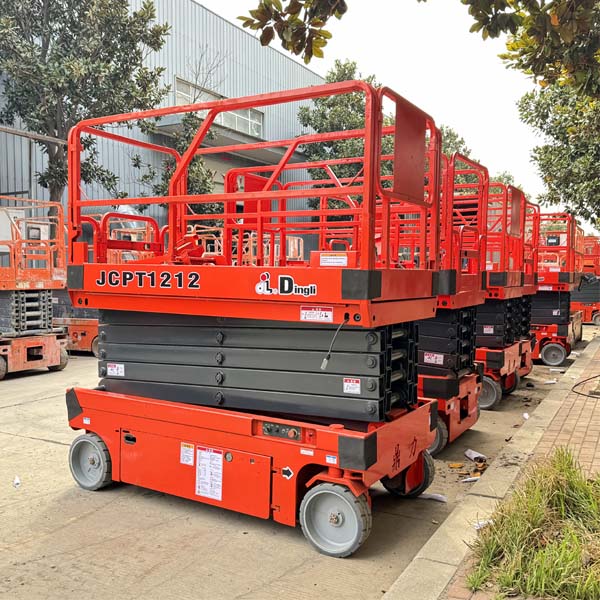
In various construction and maintenance projects, scissor lifts are widely used for their stability and efficiency. However, only those that comply with safety standards can truly ensure the safety of workers and job sites. Below, based on OSHA and ANSI standards, let's take a closer look at what makes a safety-compliant scissor lift.
Scissor Lifts Must Have Guardrails
According to OSHA Standard 1926.451, scissor lifts must be equipped with intact guardrail systems to prevent falls. If the guardrail is damaged or defective, operators must additionally wear fall protection equipment such as safety harnesses.
Key Points:
- Inspect the guardrail system before use;
- Stand only on the work platform, never on the guardrail;
- Keep work materials within reach to avoid dangerous leaning.
Scissor Lifts Must Be Stable Before Operating
ANSI MH-29-2020 specifies that operators must ensure the lift is placed on solid, level ground and away from instability risks before use.
Key Points:
- Operate outdoors only when wind speed is below 28 mph (45 km/h);
- Avoid potholes, slopes, and collision-prone areas;
- Strictly follow the manufacturer's mobility and operation guidelines.
Scissor Lifts Must Be Positioned Correctly
Improper positioning can lead to tip-over, crushing, or electrocution accidents.
Key Points:
- Keep away from obstacles and construction vehicles;
- Implement traffic control to secure the lift's operating area;
- Maintain at least 10 feet (3 meters) from power lines.
Scissor Lifts Must Be Regularly Maintained
OSHA requires all scissor lifts to be inspected regularly to prevent accidents caused by mechanical failure.
Inspection Checklist:
- Test control systems and braking devices before each use;
- Ensure guardrails are in good condition;
- Confirm brakes are set and can securely hold the lift in place.
Additional Safety Tips
- Choose the right type of lift for the environment (rough-terrain for outdoors, electric for indoors);
- Adhere to the manufacturer's load and reach limits;
- Conduct a full site assessment to identify potential hazards before starting work;
- Wear a safety harness if guardrails are damaged or if leaving the platform.
Is Certification Required?
OSHA does not require scissor lift operators to hold a license, but it does mandate that only trained personnel may operate them. Employers are responsible for providing training that covers:
- Proper operating procedures;
- Hazard recognition in the work environment;
- Correct handling of materials on the lift.
Conclusion
A safe, stable, and compliant scissor lift is not only a guarantee of construction efficiency but also the first line of defense for workers' safety.
At Asure Machinery, we uphold the values of professionalism, reliability, and safety, specializing in the global supply of high-quality used construction equipment. We maintain long-term partnerships with internationally recognized brands such as JLG, Genie, and Dingli, delivering cost-effective scissor lifts and other machinery to help projects be completed efficiently and safely.
Related News
Sep 2, 2026
Remanufactured vs Refurbished vs Rebuilt vs As-Is: What These Terms Actually Mean on Used Machinery
Four labels — remanufactured, refurbished, rebuilt, as-is — can mean a USD 5,000 to USD 50,000 price gap on the same machine. A plain-English breakdown of industry standards, what each covers, warranty differences, and how to write the condition into your contract.
Sep 2, 2026
How to Pay for Machinery from China: T/T, Letter of Credit and Trade Assurance Compared
T/T, letter of credit, Trade Assurance, or escrow — which payment method protects you best when buying used construction machinery from China? A detailed breakdown of each method's process, costs, risks, and when to use each one, with a payment timeline and comparison table.
Sep 2, 2026
What Warranty Do You Actually Get on Used and Remanufactured Machinery?
Most used machinery is sold as-is with no warranty. Remanufactured machines may carry 30 to 90 days — but what does that actually cover, and what does it exclude? An honest breakdown of warranty coverage, exclusions, how to confirm terms before buying, and ASURE's warranty policy.