
September 2, 202612 min read
Wheel Loader Buying Guide: What to Check Before You Buy
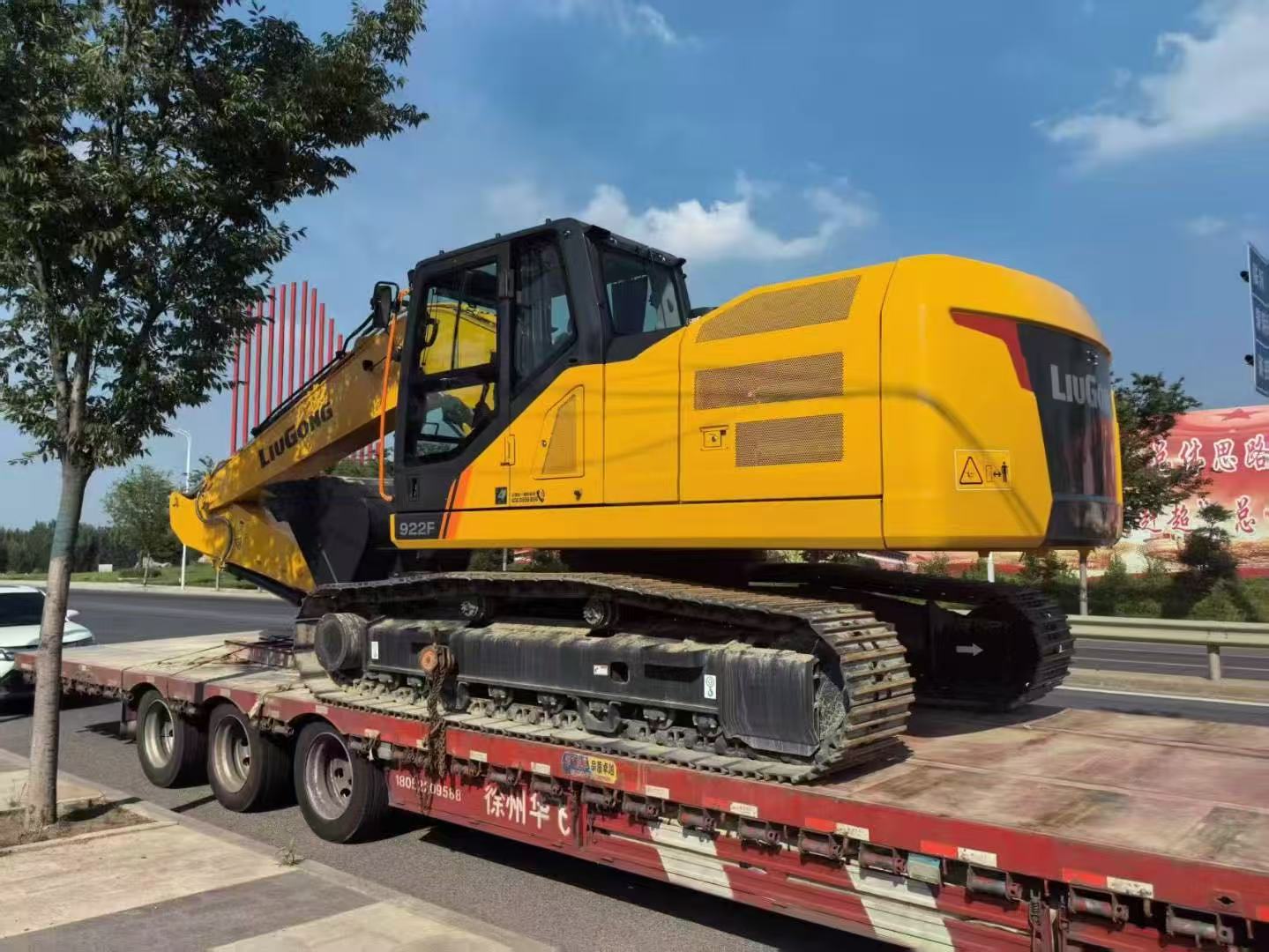
A wheel loader looks simple — bucket, arms, wheels. But the difference between a loader with five good years left and one about to cost you a fortune is a handful of specific checks. This guide covers bucket capacity classes, engine and transmission options, the critical inspection points (engine smoke, transmission shift quality, hydraulic leaks, tire wear, articulation joint play), and the brands to consider.
Match the loader to the material
The first decision in buying a wheel loader is capacity and configuration. Bucket volume, operating weight, and lift height must match what you load and how high you dump. A loader that is too small will strain to fill its bucket and take too many passes to load a truck. A loader that is too large will be expensive to operate, difficult to maneuver in tight spaces, and may damage the ground surface. The right size loads a typical haul truck in 3–5 passes and can reach the truck's bed height comfortably.
Wheel loaders are classified by operating weight and bucket capacity, which are closely related. The three main classes are: small loaders (under 1.5 m³ bucket, typically under 10 tonnes operating weight), medium loaders (1.5–3.0 m³ bucket, 10–20 tonnes), and large loaders (above 3.0 m³ bucket, 20+ tonnes). Each class suits different applications, from farm and landscaping work to quarry and mining production.
Before diving into specifics, review our general inspection methodology (many checks apply across machine types), the 29-point inspection process, and our guide on total cost of ownership over 5 years to understand the full cost picture beyond the purchase price.
Bucket capacity classes and applications
Small loaders: under 1.5 m³
Small wheel loaders are compact, maneuverable machines designed for light material handling. They are commonly used on farms, in landscaping, for small-scale construction site cleanup, in recycling facilities, and for snow removal. Their small size allows them to work in tight spaces where a larger loader cannot operate. Typical bucket capacity is 0.5–1.5 m³, operating weight is 4–10 tonnes, and engine power is 50–120 horsepower. Small loaders are often equipped with a quick-coupler system that allows the bucket to be swapped for forks, a sweeper, or other attachments.
Medium loaders: 1.5–3.0 m³
Medium wheel loaders are the most versatile class and the most common in general construction and aggregate handling. They can load standard dump trucks, handle aggregate stockpiles, do site cleanup, and perform general material handling. Typical bucket capacity is 1.5–3.0 m³, operating weight is 10–20 tonnes, and engine power is 120–250 horsepower. The 3.0 m³ class (such as the CAT 966H and Komatsu WA380) is particularly popular for loading 15–25 tonne haul trucks and handling aggregate stockpiles. Medium loaders balance productivity with transportability — most can be moved on a standard low-bed truck.
Large loaders: above 3.0 m³
Large wheel loaders are production machines for high-volume material handling in quarries, mines, and large construction projects. They are designed to load 30–100 tonne haul trucks quickly and efficiently. Typical bucket capacity is 3.0–6.0+ m³, operating weight is 20–50+ tonnes, and engine power is 250–800+ horsepower. Large loaders are expensive to purchase and operate, and require specialized transport. They are economical only when worked consistently in high-production environments. Representative models include the Komatsu WA470, SANY SYL956H5, and XCMG XC968.
Engine: power, emissions, and fuel
The engine is the heart of a wheel loader and one of the most expensive components to repair. When evaluating a used loader, pay attention to:
- Engine brand and model: Caterpillar, Cummins, Deutz, Volvo, and Weichai are common. CAT loaders use CAT engines, Komatsu uses Komatsu engines, and many Chinese brands (SANY, XCMG, SDLG) use Cummins, Weichai, or Shangchai. Choose an engine well-supported in your country.
- Power rating: A 3.0 m³ loader typically needs 180–250 horsepower. An underpowered engine will struggle to fill the bucket and consume more fuel due to constant high-load operation.
- Emissions tier: Newer engines meet stricter standards (EU Stage IIIA/IIIB/IV, US EPA Tier 2/3/4) using DPF, SCR, or EGR systems that add complexity and maintenance cost. Older, simpler engines (Tier 2/Stage II) have fewer emissions components and may be more reliable in less-regulated markets, but may not be legal in strict-emission areas. Check local regulations.
- Fuel type: Nearly all wheel loaders use diesel fuel.
Transmission: powershift vs hydrostatic
The transmission is the second most critical system, and transmission failure is one of the most expensive repairs.
Powershift (torque converter) transmission
Powershift transmissions use a torque converter and planetary gearbox with multiple forward/reverse gears (typically 4F/3R or 3F/3R). They are the traditional design for medium and large loaders, known for durability and high torque capacity. The torque converter allows the engine to keep running while stopped, providing smooth power when pushing into a stockpile. Powershift transmissions are well-understood by mechanics worldwide, and parts are widely available. The CAT 966H and Komatsu WA380 use powershift transmissions.
Hydrostatic transmission
Hydrostatic transmissions use hydraulic pumps and motors with no mechanical gearbox, offering infinitely variable speed, smooth acceleration, and excellent low-speed control. They are common in small/compact loaders and increasingly in some medium loaders. Hydrostatic systems are more fuel-efficient in stop-start cycles and require less operator skill, but can be more expensive to repair if a pump/motor fails and may be less well-understood by mechanics in some regions. They are also less tolerant of hydraulic oil contamination.
When inspecting, test the transmission by shifting through all gears, moving forward and reverse, and checking for harsh or delayed shifts, slipping, or unusual noises. A healthy powershift transmission should shift smoothly and quickly with no clunking or hesitation. Our quality control process includes transmission testing on every loader.
Hydraulic system: pumps, valves, and cylinders
The hydraulic system powers the bucket lift and tilt functions, and on hydrostatic models, the drive system as well. Key inspection points include:
- Hydraulic pump: check for leaks around the pump housing and listen for whining or grinding when operating lift and tilt. A worn pump causes slow cycle times and reduced lift force.
- Lift and tilt cylinders: inspect cylinder rods for scoring, pitting, or chrome damage. Check for oil residue on rods (leaking seals). Cycle cylinders fully in and out while watching for drift — the boom should hold position when the control is released.
- Control valve: check for external leaks. Operate controls smoothly — the valve should respond proportionally, not jerkily.
- Hydraulic oil: check level and condition. Milky oil indicates water contamination; dark or burnt oil indicates overheating or lack of maintenance. Ask when oil and filters were last changed.
- Hoses and fittings: check all hoses for cracks, bulges, chafing, or seepage. Pay special attention to hoses that flex during lift and tilt operation.
Bucket, tires, and articulation joint
Bucket and cutting edge
Inspect the bucket for cracks, bends, or excessive wear. The cutting edge (the wear plate on the bottom front of the bucket) should be checked for thickness — a worn cutting edge reduces bucket penetration and increases fuel consumption. Check the bucket pins and bushings for excessive play. If the loader is equipped with a quick-coupler, check its condition and operation. A worn bucket or cutting edge is a relatively inexpensive repair, but bucket cracks can be structural and expensive to fix properly.
Tires and rims
Tires are one of the most expensive wear items on a wheel loader — a set of four tires for a 3.0 m³ loader can cost USD 4,000–8,000. Check:
- Tread depth: Measure the remaining tread on all four tires. Tires with less than 20–30 percent remaining tread will need replacement soon.
- Sidewall condition: Check for cuts, cracks, bulges, or puncture repairs. Sidewall damage can cause sudden tire failure and is not safely repairable in most cases.
- Tire matching: All four tires should be the same size, type (radial vs bias), and ideally the same brand and age. Mismatched tires cause uneven wear and can damage the drivetrain.
- Rims and lug nuts: Check the rims for cracks or bending, and ensure all lug nuts are present and tight.
Articulation joint
The articulation joint is the pivot point between the front and rear frames of the loader. It allows the loader to steer by articulating (bending) in the middle. This joint carries enormous loads and is a critical wear point. To check for wear: with the loader parked on level ground, apply the parking brake, then have someone rock the steering wheel back and forth while you watch the articulation joint. Excessive play (more than a few degrees of free movement before the front frame responds) indicates worn joint pins and bushings. Also check for grease leaks around the joint and ensure the grease fittings are present and functional. A worn articulation joint is expensive to repair and can cause unsafe handling if neglected.
Engine smoke and operational tests
The operational test is where most hidden problems reveal themselves. Perform these tests during your inspection:
- Cold start: Start cold (no pre-warming). Note cranking time and smoke — blue = burning oil, black = over-fueling, white = coolant in combustion or unburned fuel (small amount on cold start in cool weather can be normal, persistent smoke is a red flag).
- Idle check: Idle 2–3 minutes. Listen for knocking, tapping, or rattling. Check for leaks appearing as the engine warms. Exhaust should be clear after warm-up.
- Load test: Put the bucket into a stockpile or push against a solid object while accelerating. The engine should maintain RPM without excessive black smoke or stalling. Severe bogging or heavy smoke under load indicates underpowering, turbo problems, or fuel system issues.
- Transmission test: Drive forward and reverse through all gears. Shifts should be smooth and quick — no clunking, slipping, or hesitation. Test the forward-reverse shuttle shift; it should be smooth, not harsh.
- Hydraulic cycle test: Raise/lower boom fully, tilt bucket fully in and out. Cycle times should be consistent and smooth. Check for boom drift — raise to full height, release, wait 30 seconds. Drop of more than a few centimeters indicates worn seals or faulty valve.
- Steering test: Turn fully left and right. Articulation should be smooth with no excessive play or binding. Check for hydraulic leaks at steering cylinders.
- Brakes: Test service brakes and parking brake. The loader should stop promptly and in a straight line. Inching pedals (if equipped) should function smoothly.
Brands to consider
| Brand | Typical models | Strengths | Considerations |
|---|---|---|---|
| Caterpillar | 950, 966, 980 series | Build quality, global parts/service, strong resale | Higher price, complex emissions on newer units |
| Komatsu | WA320, WA380, WA470 | Reliable engines/transmissions, fuel efficiency | Parts can be expensive in some regions |
| SANY | SYL953, SYL956 | Good value, modern design, competitive pricing | Global service network still developing |
| XCMG | LW300, LW500, XC968 | Wide model range, affordable parts, strong in emerging markets | Quality varies by model year |
| SDLG | L936, L956, L968 | Value pricing, simple reliable design | Basic features, less refined than premium brands |
| LiuGong | 835, 856, 870 | Established brand, good dealer network, durable | Older models can be fuel-inefficient |
At ASURE Machinery, we stock a range of used wheel loaders from leading brands, including the CAT 966H, Komatsu WA380, Komatsu WA470, SANY SYL953H, SANY SYL956H5, XCMG LW300M, XCMG LW500HV, and XCMG XC968. Every loader undergoes our 29-point inspection and is available for in-person or remote video inspection. Browse our full wheel loader inventory for current availability.
FAQ
What size loader do I need to load a 20-tonne dump truck?
A 20-tonne dump truck typically has a body capacity of 8–12 m³. To load it in 3–5 passes, you need a loader with a bucket capacity of 2.0–3.5 m³, which corresponds to a medium-to-large loader in the 15–25 tonne operating weight range. A 3.0 m³ loader (such as the CAT 966H or Komatsu WA380) will load a 20-tonne truck in approximately 4 passes, which is efficient. A smaller loader will take more passes and reduce productivity.
Powershift or hydrostatic transmission — which is better?
It depends on your application. Powershift transmissions are more durable for heavy-duty, high-cycle production work (quarry loading, stockpile work) and are better understood by mechanics worldwide. Hydrostatic transmissions offer smoother operation, better low-speed control, and better fuel efficiency in stop-start cycles (material handling, truck loading with frequent direction changes). For medium and large production loaders, powershift is the traditional and proven choice. For small and compact loaders, hydrostatic is common and often preferred. Consider the availability of mechanics who can service the transmission type in your area.
How much does it cost to replace a set of loader tires?
Tire cost depends on the loader size and tire type. For a 3.0 m³ loader (17.5R25 or 20.5R25 tires), a set of four radial tires typically costs USD 4,000–8,000, plus mounting and balancing. For a large loader (26.5R25 or 29.5R25 tires), a set can cost USD 10,000–20,000+. Bias-ply tires are cheaper but have shorter life and poorer ride quality. Tire life depends on the application — loaders working in abrasive conditions (quarries, recycling) may wear out tires in 1,000–2,000 hours, while loaders in clean material handling may get 4,000–6,000 hours. Always factor tire replacement cost into your total cost of ownership.
What is the most common failure point on a used wheel loader?
The transmission is the most common and most expensive failure point on used wheel loaders, followed by the engine and the hydraulic system. Transmission failures often result from lack of maintenance (infrequent oil and filter changes), overheating, or operator abuse (harsh shifting, excessive load). When inspecting a used loader, pay special attention to transmission shift quality — harsh, delayed, or slipping shifts are early warning signs. Also check the transmission oil level and condition — burnt-smelling oil or metal particles on the dipstick indicate internal damage. A transmission rebuild on a 3.0 m³ loader can cost USD 8,000–15,000.
Should I buy a wheel loader with a Tier 4 / Stage IV emissions engine?
It depends on where you will operate the machine. If you work in a region with strict emissions regulations (EU, North America, Japan), you may be required to use a Tier 4/Stage IV engine. These engines are cleaner but more complex — they use DPF, SCR, or EGR systems that require additional maintenance (DPF regeneration, DEF fluid for SCR) and can be more expensive to repair. If you work in a less-regulated region (Africa, Southeast Asia, Middle East, South America), a simpler Tier 2/Stage II or Tier 3/Stage IIIA engine may be more reliable and easier to maintain, and parts are typically cheaper. However, be aware that some ports and countries restrict the import of older, higher-emission machines — check your local import regulations before buying.
Sources and references: Caterpillar, Komatsu, SANY, and XCMG official wheel loader specification sheets; Construction Equipment Association loader inspection guidelines; industry standard maintenance and failure data. Specifications vary by model, configuration, and year — always verify specific specs before purchasing. Browse ASURE Machinery's full wheel loader inventory or contact us for help choosing the right loader for your application.
Related News
Sep 2, 2026
Remanufactured vs Refurbished vs Rebuilt vs As-Is: What These Terms Actually Mean on Used Machinery
Four labels — remanufactured, refurbished, rebuilt, as-is — can mean a USD 5,000 to USD 50,000 price gap on the same machine. A plain-English breakdown of industry standards, what each covers, warranty differences, and how to write the condition into your contract.
Sep 2, 2026
How to Pay for Machinery from China: T/T, Letter of Credit and Trade Assurance Compared
T/T, letter of credit, Trade Assurance, or escrow — which payment method protects you best when buying used construction machinery from China? A detailed breakdown of each method's process, costs, risks, and when to use each one, with a payment timeline and comparison table.
Sep 2, 2026
What Warranty Do You Actually Get on Used and Remanufactured Machinery?
Most used machinery is sold as-is with no warranty. Remanufactured machines may carry 30 to 90 days — but what does that actually cover, and what does it exclude? An honest breakdown of warranty coverage, exclusions, how to confirm terms before buying, and ASURE's warranty policy.