
September 2, 202612 min read
RoRo vs Container vs Breakbulk: How to Ship Used Construction Machinery from China
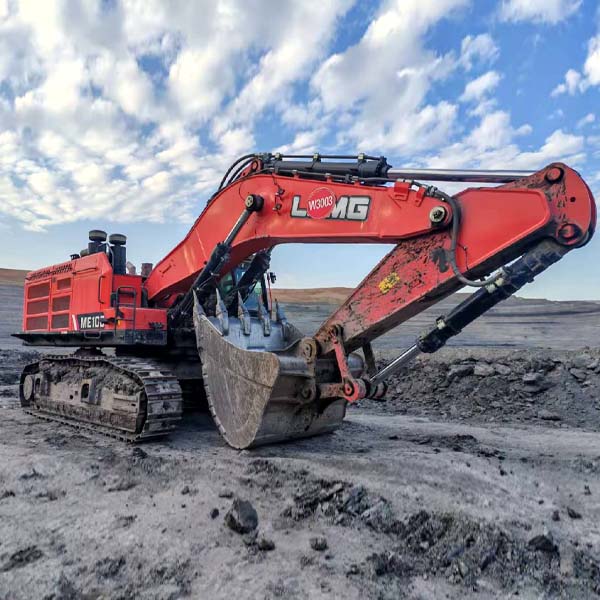
Choosing between RoRo, container shipping, and breakbulk is one of the most consequential logistics decisions when exporting used construction machinery from China. The wrong method can add thousands in cost, delay delivery by weeks, or result in damaged equipment. This guide breaks down how each method works, relative costs, and which mode fits excavators, wheel loaders, crawler dozers, cranes, and more.
Why Shipping Method Matters for Used Construction Machinery
Unlike consumer goods in cartons, used construction machinery is heavy, awkwardly shaped, and often worth tens of thousands per unit. A 20-ton excavator has a swinging boom, tracks that can scuff a container floor, and a cabin needing salt-spray protection. A 50-ton mobile crane may be too tall for any container and too heavy for a flat rack. These physical constraints — not price alone — usually determine which method is possible.
The three dominant methods for moving used machinery out of China are RoRo (roll-on/roll-off), container shipping (standard, flat rack, open top), and breakbulk (project cargo lifted by cranes). Each has distinct cost profiles, risk levels, and equipment compatibility. For a shorter primer, see our overview article.
RoRo (Roll-on/Roll-off): How It Works and When to Use It
The RoRo Vessel and Loading Process
RoRo vessels are floating parking garages with built-in ramps (stern or side) allowing wheeled or tracked self-propelled equipment to be driven or towed onto internal decks. Units are secured with lashing rings, chocks, and straps. No shore crane is needed, reducing handling damage and port time. Modern Pure Car and Truck Carriers (PCTCs) have multiple adjustable decks, some liftable for tall machinery.
Höegh Autoliners operates roughly 40 RoRo vessels making 2,000+ port calls annually, while Wallenius Wilhelmsen runs about 125 vessels across 15 trade routes on six continents. Both list construction, mining, and agricultural machinery as core cargo (verified from carrier websites).
Eligibility and Pre-Shipment Preparation
The critical requirement: the unit must be self-propelled or towable on its own wheels or tracks. This includes wheel loaders, dump trucks, forklifts, mobile cranes, aerial platforms, and tracked excavators/dozers. Static or disassembled equipment (tower crane sections, skid-mounted generators) does not qualify. Height limits are 3.5–4.0 m; machines of 60+ t may need deck-strength certification and often go breakbulk.
Carriers require: disconnecting the battery, draining fuel to no more than one-quarter tank, securing loose parts (buckets, mirrors), taping exhaust outlets, and applying corrosion inhibitor. The machine must be clean — Australia and the EU require biosecurity inspections. Cabin rain covers are recommended.
Major RoRo Routes from China
Key load ports: Shanghai, Shenzhen (Yantian/Shekou), Tianjin, Guangzhou (Nansha). Regular services go to:
- West Africa (Lagos, Abidjan, Tema): ~30–40 days
- East Africa (Mombasa, Dar es Salaam, Durban): ~25–32 days
- Middle East (Jeddah, Jebel Ali, Dammam): ~18–25 days
- Europe (Rotterdam, Bremerhaven, Antwerp): ~28–38 days
Transit times are industry-experience ranges from carrier schedules and shipping platforms; actual durations vary with season and congestion.
Container Shipping: Standard, Flat Rack, and Open Top
Container shipping is rarely as simple as “drive the machine into a 40-foot box.” Used machinery often exceeds standard dimensions or payload, requiring special types. For detailed size selection (LCL vs FCL, 20GP vs 40HQ), see our dedicated container dimensions guide.
Standard Containers (20GP, 40GP, 40HQ)
Fully enclosed steel boxes with double doors offer the best weather/theft protection and lowest freight cost when cargo fits. Verified specs from Maersk, CMA CGM, and Hapag-Lloyd:
| Type | Internal L × W × H (m) | Max Payload (kg) | Volume (m³) |
|---|---|---|---|
| 20GP | 5.898 × 2.352 × 2.393 | ~28,200 | 33.2 |
| 40GP | 12.032 × 2.352 × 2.393 | ~28,800 | 67.7 |
| 40HQ | 12.032 × 2.352 × 2.698 | ~26,800–28,800 | 76.4 |
A 20-ton excavator with boom folded is ~9.5 m long — too long for a 40GP once door opening and lashing space are accounted for. Smaller equipment (skid steers, compact excavators under 8 t, forklifts) often fits 20GP or 40HQ. The 40HQ’s extra 30 cm height is critical for ROPS cabins.
Flat Rack and Open Top Containers
Flat racks (FR) have a reinforced steel floor and collapsible end walls but no roof or side walls. A 40′ FR from Hapag-Lloyd has internal length ~11,652 mm, floor width ~2,347 mm, and max payload ~49,100 kg (verified). Maersk lists 40′ FR payload at ~47,000 kg. Flat racks are the go-to for 20–40 t excavators, crawler dozers, and wheel loaders too wide/tall for standard containers. Cargo is exposed, so waterproof wrapping and lashing are mandatory.
Open tops (OT) have standard side walls and doors but a removable tarpaulin roof, allowing top-loading by crane. A 40′ OT from Hapag-Lloyd measures ~12,029 × 2,350 × 2,380 mm with payload ~28,400 kg (verified). Open tops suit wheel loaders with high lift arms and machinery too tall for container doors. The tarp provides better weather protection than a flat rack but less than a sealed container.
Lashing, Blocking, and Waterproofing
All machinery must be secured to container floor lashing rings with certified webbing, chain binders, or wire rope. Wooden blocking chocks wheels and tracks. For flat rack and open top shipments, wrap the machine in waterproof tarpaulin or heat-shrink film with desiccant. Seal hydraulic cylinders, air intake, and exhaust. Poor lashing is the single most common cause of transit damage.
Breakbulk Shipping: For Oversized and Project Cargo
Breakbulk (general/project cargo) refers to goods shipped individually — not in containers and not driven onto RoRo. Each piece is lifted on/off by shore cranes, ship’s gear, or floating cranes. Breakbulk vessels have open decks, large hatches, and heavy-lift cranes (some 500+ t). Cargo is charged per piece or per freight ton (weight vs. measurement, whichever is greater), not per container.
Because handling is labor-intensive and requires specialized cranes, breakbulk is generally the most expensive method. But for cargo that cannot be containerized or RoRo’d — a 100-ton crawler crane, tunnel boring machine, or tower crane in sections — it is the only option. Typical cargo includes large crawler cranes (80+ t) with boom sections and counterweights, disassembled tower cranes, 60+ t excavators and mining dozers, and multi-piece project shipments.
Side-by-Side Comparison: RoRo vs Container vs Breakbulk
| Dimension | RoRo | Container (Std / FR / OT) | Breakbulk |
|---|---|---|---|
| Suitable equipment | Wheeled/tracked self-propelled units | Compact to medium machinery; oversized on FR/OT | Very large, heavy, or disassembled project cargo |
| Size/weight limits | Height ~3.5–4 m; up to ~60 t | 40HQ: ~27 t / 12 m; 40′FR: ~47–49 t / 11.7 m | Virtually unlimited (crane & deck strength) |
| Relative cost | Low–Medium (per unit; efficient for multiple wheeled units) | Low (std) – Medium–High (FR/OT) | High (per freight ton; labor-intensive) |
| Protection | Good (enclosed decks; exposed during ramp loading) | Excellent (std) / Moderate (FR) / Good (OT) | Low–Moderate (open deck; heavy wrapping) |
| Loading | Self-driven/towed via ramp; no crane | Forklift/driven (std); crane (FR/OT) | Shore/ship crane; stevedores |
| Transit time | Direct liner; 18–40 days by route | High frequency; 20–40 days; transshipment common | Less frequent; port rotation; 30–60+ days |
| Key risks | Ramp damage; fuel/battery non-compliance; terminal congestion | Lashing failure; water ingress on FR/OT; oversize surcharges | Handling damage; weather exposure; port delays; theft |
| Typical scenario | Fleet of wheel loaders/dump trucks to Africa or Middle East | Compact excavators in 40HQ; 30 t excavator on FR to SE Asia | Tower crane sections or 100 t crawler crane to mining project |
Equipment-to-Method Matching Guide
| Equipment | Recommended Method | Reason | Notes |
|---|---|---|---|
| Excavator 20 t (CAT 320, PC200) | 40′ Flat Rack or RoRo | Folded length ~9–10 m too long for std; fits FR or drivable on RoRo | Remove bucket if overwidth; wrap on FR |
| Excavator 30 t (CAT 330, ZX300) | 40′ Flat Rack or RoRo | ~30 t within FR payload; ~11 m fits 40′FR | Check track width vs FR floor (2.35 m) |
| Excavator 40 t+ (CAT 349, PC400) | RoRo or Breakbulk | May exceed 40′FR payload; boom length problematic | Remove boom/counterweight for FR; else RoRo/breakbulk |
| Wheel Loader (CAT 950/966, LiuGong 856) | RoRo (preferred) or 40′ OT/FR | Self-propelled; ROPS height may exceed std door; RoRo most efficient | Lower lift arms; remove mirrors; drain fuel |
| Crawler Dozer (CAT D6/D7, Shantui SD22) | Flat Rack or RoRo | Tracked/self-propelled; width 2.5–3.3 m overwidth for std | Remove ripper if overlength; check FR payload for D8+ |
| Mobile/Truck Crane 25–50 t | RoRo (preferred) or Breakbulk | Self-propelled; folded boom 12–14 m too long for FR; height often 3.5+ m | Secure boom; remove counterweights if overheight |
| Tower Crane (disassembled) | Breakbulk or Flat Rack (sections) | Mast/jib/counterweights oversized; multiple pieces need project handling | Bundle sections; label parts; ship as one lot |
| Scissor Lift | 40HQ Standard or RoRo | Compact stowed; fits container doors; multiple per 40HQ | Stow rails down; disconnect batteries |
| Boom Lift (articulated/telescopic) | RoRo or FR/OT | Stowed height may exceed std; self-propelled for RoRo | Lower/secure boom; remove basket if overwidth |
| Forklift 3–10 t | 20GP/40HQ Standard or RoRo | Compact; fits std container; multiple units possible | Lower mast; tilt fork carriage; disconnect battery |
| Dump Truck/Articulated Hauler | RoRo (preferred) or Flat Rack | Wheeled/self-propelled; height/weight exceed std container | Lower bed; secure tailgate; drain fuel |
Cost Breakdown: What Drives Your Total Shipping Bill
Freight rates fluctuate with fuel, capacity, season, and geopolitics. We use relative cost levels, not quotes. Total landed cost includes:
- Ocean freight — largest item. Standard containers cheapest; FR/OT cost roughly 1.5–2.5× a 40GP; RoRo priced per unit (competitive for wheeled equipment in quantity); breakbulk per freight ton (most expensive).
- Inland transport — trucking from yard to load port. Oversized cargo needs low-bed trailers and permits.
- Port charges — terminal handling (THC), wharfage, security. FR and breakbulk incur higher crane fees.
- Customs declaration — export filing in China; used machinery may need pre-shipment inspection certificates. Incoterms 2020 determines who pays each leg.
- Lashing/packaging — wood blocking, strapping, tarpaulin, desiccant. Mandatory; carriers may reject improperly secured cargo.
- Insurance — marine cargo insurance, typically 0.1–0.3% of cargo value. Always insure; carrier liability under B/L is limited.
- Destination charges — THC, customs clearance, import duties, final delivery. Duties vary by country — see our import duty and HS code guide. For long-term context, read our 5-year TCO analysis.
Decision Framework: Choosing the Right Method
Use this decision tree:
Step 1 — Self-propulsion. Is the machine wheeled/tracked and able to move under its own power or be towed? If yes, RoRo is a candidate. If disassembled or static, go to container or breakbulk.
Step 2 — Dimensions and weight. Measure in shipping configuration (boom folded, arms lowered). Compare against std container (~12.0 × 2.35 × 2.70 m, ~28 t), 40′ FR (~11.7 × 2.35 m, ~47–49 t), and RoRo deck limits (~3.5–4.0 m). Exceeding all means breakbulk.
Step 3 — Destination port capabilities. Does the port have RoRo berths/ramps? Many smaller African and SE Asian ports do not. Does it have heavy-lift cranes for breakbulk? If not, the vessel must be geared.
Step 4 — Budget. If cost is primary and equipment fits, standard container is usually cheapest. For wheeled equipment in quantity, RoRo offers the best cost/protection balance. Breakbulk is a last resort.
Step 5 — Transit time. Container services have highest frequency (weekly on major lanes). RoRo is less frequent (biweekly/monthly). Breakbulk is least predictable.
For how shipping fits into overall purchase cost, see our total cost of buying machinery from China.
Reducing Damage Risk During Transit
Transit damage is the top complaint from used machinery buyers. Common issues include cabin damage from shifting cargo, hydraulic rod corrosion, broken glass/lights, component theft, and water damage to electronics. Mitigation:
- Lashing — certified straps/chains at 4–6+ points; wooden chocks for wheels/tracks.
- Waterproof wrapping — heat-shrink film or heavy-duty tarpaulin for all FR/OT shipments.
- Component protection — remove and crate glass, lights, mirrors; seal exhaust/intake; grease rods.
- Battery/fuel — disconnect or remove batteries; drain fuel to 1/4 tank (RoRo) or near-empty (some carriers).
- Documentation — dated pre-loading photos from all angles. Essential for insurance. ASURE offers professional inspection.
- Insurance — always purchase all-risks cargo insurance. For high-value equipment, consider a surveyor at load and discharge.
Frequently Asked Questions
Can an excavator be shipped via RoRo?
Yes. Tracked excavators are self-propelled and can be driven slowly up the RoRo ramp. This is often the most cost-effective method for a single 20–30 t excavator when the destination has RoRo facilities. Fold and secure the boom, remove or pin the bucket, and disconnect the battery. Excavators of 50+ t may exceed deck limits and require breakbulk.
What is the difference between a flat rack and an open top container?
A flat rack has only a floor and collapsible end walls — no roof or side walls. Cargo is loaded from side/top, fully exposed, requiring heavy waterproof wrapping. Used for overwidth, overheight, very heavy cargo. An open top has full side walls and doors but a removable tarp roof, allowing top-loading by crane while retaining side/end protection. Used for cargo too tall for container doors but not needing side access. Flat racks have higher payload (~47–49 t for 40′) vs open tops (~28 t).
How much more expensive is breakbulk vs container shipping?
As a rough industry estimate, breakbulk can cost 2–5 times more than container shipping for equivalent weight, due to crane handling, specialized vessels, lower frequency, and per-freight-ton pricing. But this comparison is often academic — breakbulk serves cargo that cannot fit in a container. For a 100 t crawler crane there is no alternative. The relevant comparison is breakbulk vs. disassembling into container-sized pieces, which may be cheaper but risks lost/damaged components.
How can I reduce damage risk during shipping?
Key measures: (1) proper lashing with certified straps and wooden blocking; (2) waterproof wrapping for open-container shipments; (3) removing and crating fragile components (glass, lights, mirrors); (4) sealing exhausts/intakes and greasing hydraulic rods; (5) pre-shipment photos for insurance; (6) all-risks marine insurance. ASURE offers condition grading and export prep.
How do I buy shipping insurance for used construction machinery?
Marine cargo insurance is available through your freight forwarder, broker, or online platform. Policies are typically written for 110% of CIF value. Premiums generally range 0.1–0.3% of insured value for standard routes; high-risk routes (Red Sea, West Africa) may carry higher premiums or war-risk exclusions. Always choose All Risks over FPA/WPA, and confirm coverage includes damage from inadequate lashing. Keep the policy, bill of lading, and pre-shipment photos together for claims.
Do I need to disassemble my machine before shipping?
It depends on the method. For RoRo, the machine should be drivable with boom/arms folded — full disassembly is not required and may disqualify the unit. For standard containers, partial disassembly (removing bucket, folding boom, lowering mast) is often needed. For flat racks, disassembly is usually limited to overwidth/overlength attachments. Full disassembly is only economical for very large machines that would otherwise require breakbulk.
Sources and disclaimers: Container specs verified from published guides by Maersk, Hapag-Lloyd, and CMA CGM. RoRo operator info verified from Höegh Autoliners and Wallenius Wilhelmsen. Transit times are indicative ranges from carrier schedules and platforms (Fluent Cargo, Cogoport). All cost comparisons are relative and subject to market fluctuation; no specific freight quotes are provided. For equipment sourcing, inspection, and export prep, visit our catalog, inspection services, condition standards, or contact ASURE.
Related News
Sep 2, 2026
Remanufactured vs Refurbished vs Rebuilt vs As-Is: What These Terms Actually Mean on Used Machinery
Four labels — remanufactured, refurbished, rebuilt, as-is — can mean a USD 5,000 to USD 50,000 price gap on the same machine. A plain-English breakdown of industry standards, what each covers, warranty differences, and how to write the condition into your contract.
Sep 2, 2026
How to Pay for Machinery from China: T/T, Letter of Credit and Trade Assurance Compared
T/T, letter of credit, Trade Assurance, or escrow — which payment method protects you best when buying used construction machinery from China? A detailed breakdown of each method's process, costs, risks, and when to use each one, with a payment timeline and comparison table.
Sep 2, 2026
What Warranty Do You Actually Get on Used and Remanufactured Machinery?
Most used machinery is sold as-is with no warranty. Remanufactured machines may carry 30 to 90 days — but what does that actually cover, and what does it exclude? An honest breakdown of warranty coverage, exclusions, how to confirm terms before buying, and ASURE's warranty policy.