
September 2, 202612 min read
How to Choose the Right Excavator Tonnage: A Buyer's Guide from Micro to Mining
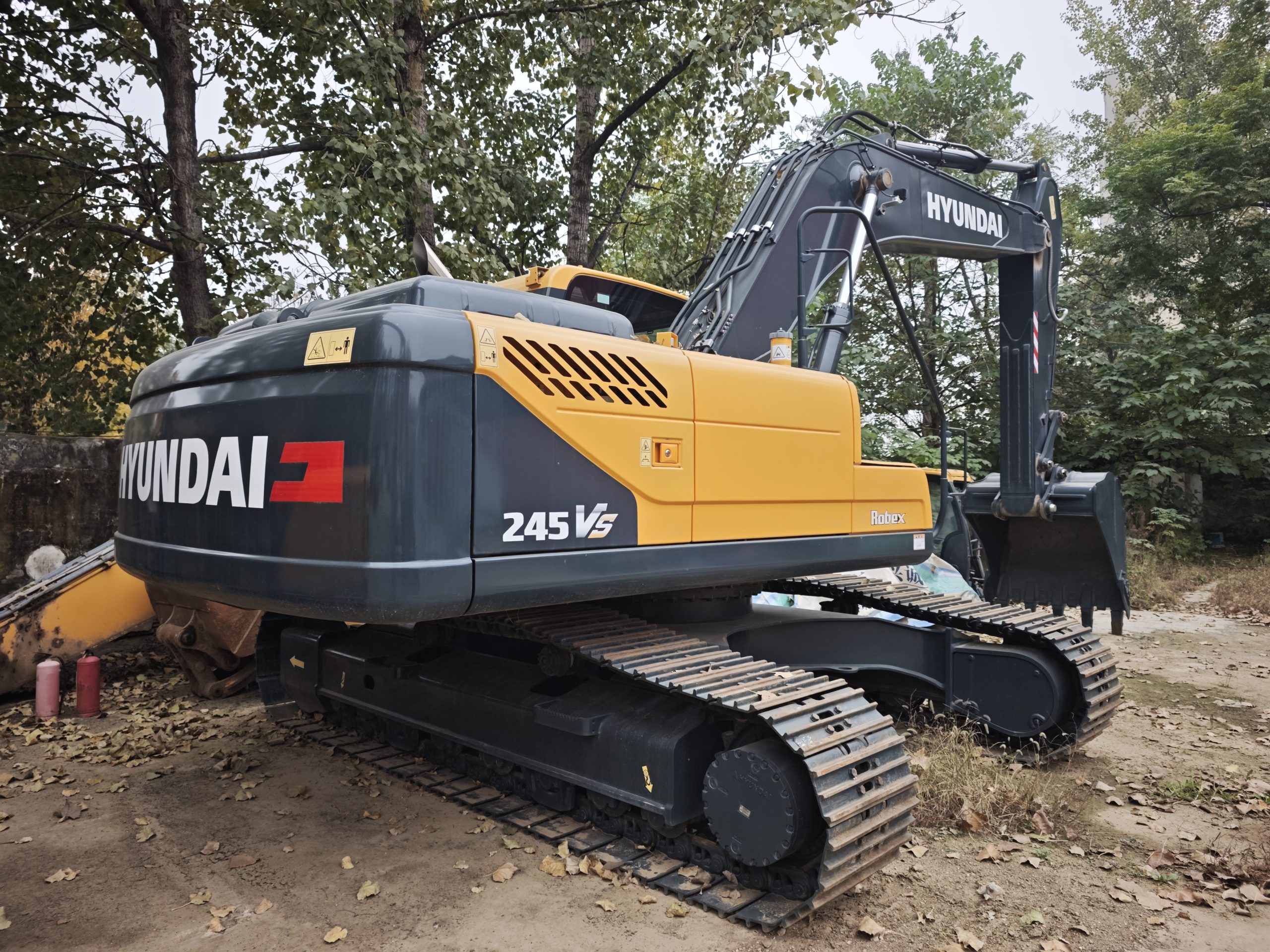
A 5-tonne mini excavator and a 50-tonne production machine are different tools for different jobs. Tonnage sets the bucket capacity, digging depth, breakout force, transport cost, and fuel burn — get it wrong and you either own a machine that cannot do the work or one that costs more than it earns. Here is how to match excavator tonnage to your project, site, transport, and budget.
What tonnage actually changes
Tonnage — the operating weight of the excavator — is the single most important specification because it determines almost everything else about the machine. A heavier machine has a larger engine, bigger hydraulic pumps, a wider undercarriage, and a larger bucket. It can dig deeper, lift more, and break harder ground. But it also costs more to buy, more to fuel, more to transport, and requires a larger, more stable work site.
The key relationship is between tonnage and bucket capacity. As a rough rule of thumb, a 20-ton excavator uses a 0.8–1.0 m³ bucket, a 30-ton machine uses a 1.2–1.6 m³ bucket, and a 50-ton machine uses a 2.0–2.8 m³ bucket. The bucket capacity directly determines productivity — how many cubic meters you can move per hour. But a larger bucket also requires more power and a more stable base, which is why tonnage and bucket size scale together.
Before choosing a tonnage, you should also consider the brand and model. Our comparison of the CAT 320 vs Komatsu PC200 vs SANY SY215 covers the most popular 20-ton class machines, and our guides on Komatsu vs Caterpillar vs Volvo and SANY vs XCMG help you compare brands. Once you know the tonnage, use our used excavator inspection checklist to evaluate specific machines.
Tonnage classes and their applications
Micro excavators: under 6 tonnes
Micro excavators (also called mini or compact excavators) are the smallest class, typically weighing 1–6 tonnes. They are designed for work in tight spaces where a larger machine cannot fit. Typical applications include indoor demolition, basement excavation, utility trenching in urban areas, landscaping, swimming pool construction, and residential foundation work.
Micro excavators typically use buckets of 0.02–0.20 m³, have digging depths of 1.5–3.5 meters, and are powered by engines of 10–50 horsepower. Their small size means they can pass through standard doorways (some models have retractable undercarriages as narrow as 700 mm) and can be transported on a small trailer behind a pickup truck. Fuel consumption is very low — typically 2–5 liters per hour.
The limitation of micro excavators is productivity. They cannot move large volumes of material quickly, and their digging force is limited. If your project involves more than a few hundred cubic meters of excavation, a micro excavator will take too long. Representative models include the CAT 301.7CR, SANY SY18U, SANY SY19E, and Komatsu PC56.
Small excavators: 6–12 tonnes
Small excavators in the 6–12 tonne range are the workhorses of municipal construction, landscaping, and utility work. They offer a good balance of power and maneuverability, and can handle a wider range of tasks than micro machines. Typical applications include municipal road repair, sewer and water line installation, residential site preparation, landscaping, agricultural drainage, and small-scale demolition.
Small excavators typically use buckets of 0.15–0.45 m³, have digging depths of 3.5–5.0 meters, and are powered by engines of 40–90 horsepower. They can be transported on a medium-duty trailer, though some larger models in this class require a low-bed truck. Fuel consumption is typically 5–10 liters per hour.
This class is popular with owner-operators and small contractors because the machines are versatile, relatively affordable, and easy to transport. They can handle most residential and light commercial projects without requiring special transport permits. Representative models include the CAT 313GC (13 tonnes, at the upper end of this class), Komatsu PC70, SANY SY35C, XCMG XE75DA, and SDLG ER616H.
Medium excavators: 12–25 tonnes
Medium excavators in the 12–25 tonne range are the most versatile and most widely sold class worldwide. The 20-tonne size in particular is the global standard for general construction — it is the "one size fits most" machine that can handle the majority of construction, earthmoving, and utility projects. Typical applications include building foundation excavation, road construction, utility trenching, site development, general earthmoving, and light quarry work.
Medium excavators typically use buckets of 0.4–1.1 m³, have digging depths of 5.0–7.0 meters, and are powered by engines of 90–170 horsepower. The 20-ton class specifically (such as the CAT 320D at ~20.4 tonnes with a 0.9 m³ bucket, the Komatsu PC200, and the SANY SY215C) is the most popular size because it balances productivity with transportability. A 20-ton excavator can be transported on a standard low-bed truck in most countries without special permits (though weight limits vary by jurisdiction). Fuel consumption is typically 10–18 liters per hour.
If you are unsure which tonnage to choose and your projects are general construction or earthmoving, a 20-ton class machine is usually the safest choice. It has enough power for most tasks, is widely supported with parts and service, and holds its value well in the resale market. Other representative models in this class include the Hyundai R215-9C, XCMG XE200GH, Zoomlion ZE205E, and SDLG E6200H.
Large excavators: 25–45 tonnes
Large excavators in the 25–45 tonne range are production machines designed for high-volume earthmoving and heavy construction. They are commonly used on large building projects, highway construction, dam and reservoir projects, quarry loading, and heavy demolition. These machines prioritize productivity over maneuverability — they move a lot of material quickly but require a large work site and specialized transport.
Large excavators typically use buckets of 1.0–2.0 m³, have digging depths of 7.0–9.0 meters, and are powered by engines of 170–350 horsepower. Transport requires a heavy-duty low-bed trailer and may require special permits and pilot vehicles due to weight and dimension limits. Fuel consumption is significantly higher — typically 18–35 liters per hour. The higher operating costs mean these machines must be worked consistently to be economical.
Choose a large excavator when your projects involve moving more than 5,000 cubic meters of material, or when you need the digging force and reach for heavy quarry or demolition work. If your projects are smaller or more varied, a medium excavator will be more cost-effective even if it takes longer to complete the work. Representative models include the CAT 330 (~30 tonnes), CAT 340 (~36 tonnes), Komatsu PC240, Komatsu PC360, SANY SY245H, SANY SY375H, Hyundai HX200, and XCMG XE650GK (at the upper end).
Mining excavators: above 45 tonnes
Excavators above 45 tonnes are specialized mining and heavy quarry machines. They are designed for continuous high-production loading of haul trucks in surface mines, large quarries, and major infrastructure projects. These machines are too large and too expensive for general construction work, and their transport requires significant planning — some must be partially disassembled for transport between sites.
Mining excavators typically use buckets of 2.0–6.0+ m³, have digging depths of 8–12 meters, and are powered by engines of 350–1,000+ horsepower. Fuel consumption is very high — 35–80+ liters per hour — and the machines require dedicated maintenance support. They are typically purchased by mining companies, large quarry operators, and major infrastructure contractors who have the volume of work to justify the investment.
If you are considering a mining-class excavator, you should also evaluate whether a rope shovel or wheel loader might be more productive for your specific application. Representative models include the Komatsu PC450 (~45 tonnes, at the lower boundary of this class), SANY SY550H (~50 tonnes), and Hyundai R485LVS (~48 tonnes).
Tonnage — application — bucket capacity reference
| Class | Weight range | Typical bucket | Dig depth | Engine power | Typical applications | Transport |
|---|---|---|---|---|---|---|
| Micro | 1–6 t | 0.02–0.20 m³ | 1.5–3.5 m | 10–50 hp | Indoor demo, utilities, landscaping, pools | Pickup trailer |
| Small | 6–12 t | 0.15–0.45 m³ | 3.5–5.0 m | 40–90 hp | Municipal, sewer, residential, landscaping | Medium trailer / low-bed |
| Medium | 12–25 t | 0.4–1.1 m³ | 5.0–7.0 m | 90–170 hp | Foundations, roads, general earthmoving, utilities | Standard low-bed truck |
| Large | 25–45 t | 1.0–2.0 m³ | 7.0–9.0 m | 170–350 hp | Highway, dams, quarry loading, heavy demo | Heavy low-bed, possible permits |
| Mining | 45+ t | 2.0–6.0+ m³ | 8–12 m | 350–1000+ hp | Surface mining, large quarries, haul truck loading | Partial disassembly, specialized transport |
How to choose: four questions to answer
1. What is your primary application?
The type of work you do most often is the primary determinant of tonnage. If you mostly do residential foundations and utility trenches, a 12–20 ton machine is appropriate. If you do highway construction and large site development, you need 25–35 tons. If you load haul trucks in a quarry, you need 40+ tons. Be honest about your primary work — do not buy a machine for the occasional large project if 90 percent of your work is small jobs.
2. What are the site constraints?
The size and accessibility of your work sites limit the maximum machine size. If you work in urban areas with narrow streets and limited space, a large excavator may not fit or may be difficult to position. If you work on soft ground, a heavier machine may sink — you may need a wider undercarriage or a lighter machine. If you work in residential areas, noise and weight restrictions may limit your options. Measure your typical work sites and check local regulations before choosing.
3. What are the transport requirements and costs?
Transport cost is often the hidden factor in total cost of ownership. A 20-ton excavator can be moved on a standard low-bed truck in most countries. A 35-ton machine may require a special permit, a heavier truck, and possibly a pilot vehicle — doubling or tripling transport costs. A 50-ton mining excavator may need to be partially disassembled for transport, which adds days of setup and teardown time. If you move the machine frequently between sites, transport cost and convenience should heavily influence your tonnage choice. Our guide on total cost of ownership explains how to factor transport and other costs into your buying decision.
4. What is your budget and utilization plan?
Larger machines cost more to buy, more to fuel, and more to maintain. A 30-ton excavator may cost 50–80 percent more than a 20-ton machine, and its hourly operating cost may be 60–100 percent higher. If you cannot keep the machine working at least 1,000–1,500 hours per year, the higher fixed costs may not be justified. Calculate your expected utilization and compare the hourly cost of different tonnage classes. In many cases, a smaller machine worked more hours is more profitable than a larger machine that sits idle.
The 20-ton sweet spot
If after answering these questions you are still unsure, the 20-ton class is the default recommendation for most general contractors. It is the most widely sold excavator size globally, which means: the widest selection of used machines on the market, the best availability of parts and service technicians, the strongest resale value, and the lowest operating cost per ton of productivity. The CAT 320D, Komatsu PC200, and SANY SY215C are all proven 20-ton class machines with strong global support. Read our detailed comparison to decide which brand is right for you.
You can browse our full inventory of used excavators across all tonnage classes, from micro machines like the SANY SY18U to mining-class machines like the Komatsu PC450. Every machine comes with a written condition report and is available for in-person or remote video inspection.
FAQ
Can I use a 20-ton excavator for quarry work?
A 20-ton excavator can handle light quarry work and small-scale material loading, but it is not efficient for high-production quarry operations. For loading 30–40 ton haul trucks consistently, you need a 35–50 ton machine with a 1.5–2.5 m³ bucket. A 20-ton machine will take too many passes to load a truck, reducing productivity and increasing cost per ton. If your quarry work is occasional or low-volume, a 20-ton machine may be sufficient; if it is your primary work, size up.
Is it better to buy a larger machine than I need for future projects?
Generally no. Buying a larger machine "just in case" means paying higher purchase costs, fuel costs, maintenance costs, and transport costs for work that a smaller machine could handle. The extra capacity only pays for itself if you actually use it consistently. A better strategy is to buy the right size for your current primary work, and rent a larger machine for the occasional big project. This gives you flexibility without the ongoing cost of owning an oversized machine.
How does tonnage affect fuel consumption?
Fuel consumption scales roughly with engine power, which scales with tonnage. As a rough guide: micro (1–6 t) = 2–5 L/h, small (6–12 t) = 5–10 L/h, medium (12–25 t) = 10–18 L/h, large (25–45 t) = 18–35 L/h, mining (45+ t) = 35–80+ L/h. Actual consumption depends on the work cycle, operator skill, soil conditions, and machine condition. Over a 2,000-hour year, the fuel cost difference between a 20-ton and a 35-ton machine can be USD 8,000–15,000.
What is the maximum excavator size I can transport without special permits?
This varies by country and jurisdiction. In many countries, a standard low-bed truck can carry up to 20–25 tonnes without special permits (subject to axle weight limits). Above that, you may need a permit for overweight transport, and above 35–40 tonnes, you may need pilot vehicles and route planning. Always check the transport regulations in your specific region before purchasing a large machine. Some excavators have removable counterweights or adjustable undercarriages that can reduce transport dimensions.
Should I match the excavator size to my dump trucks?
Yes. If you are loading haul trucks, the excavator bucket size should be matched to the truck capacity for efficient loading. As a general rule, you want to load a truck in 3–5 bucket passes. For example, a 20-ton excavator with a 0.9 m³ bucket loads a 4–5 m³ (10–15 ton) truck in 4–5 passes. A 35-ton excavator with a 1.6 m³ bucket loads a 8–10 m³ (20–30 ton) truck in 5–6 passes. If the excavator is too small for the truck, loading takes too many passes and the truck waits. If the excavator is too large, you over-fill the truck or waste the machine's capacity.
Sources and references: Caterpillar, Komatsu, and SANY official excavator specification sheets; Construction Equipment Association size class guidelines; industry standard productivity and transport data. Specifications vary by model, configuration, and year — always verify specific specs before purchasing. Browse ASURE Machinery's full excavator inventory or contact us for help choosing the right tonnage for your application.
Related News
Sep 2, 2026
Remanufactured vs Refurbished vs Rebuilt vs As-Is: What These Terms Actually Mean on Used Machinery
Four labels — remanufactured, refurbished, rebuilt, as-is — can mean a USD 5,000 to USD 50,000 price gap on the same machine. A plain-English breakdown of industry standards, what each covers, warranty differences, and how to write the condition into your contract.
Sep 2, 2026
How to Pay for Machinery from China: T/T, Letter of Credit and Trade Assurance Compared
T/T, letter of credit, Trade Assurance, or escrow — which payment method protects you best when buying used construction machinery from China? A detailed breakdown of each method's process, costs, risks, and when to use each one, with a payment timeline and comparison table.
Sep 2, 2026
What Warranty Do You Actually Get on Used and Remanufactured Machinery?
Most used machinery is sold as-is with no warranty. Remanufactured machines may carry 30 to 90 days — but what does that actually cover, and what does it exclude? An honest breakdown of warranty coverage, exclusions, how to confirm terms before buying, and ASURE's warranty policy.